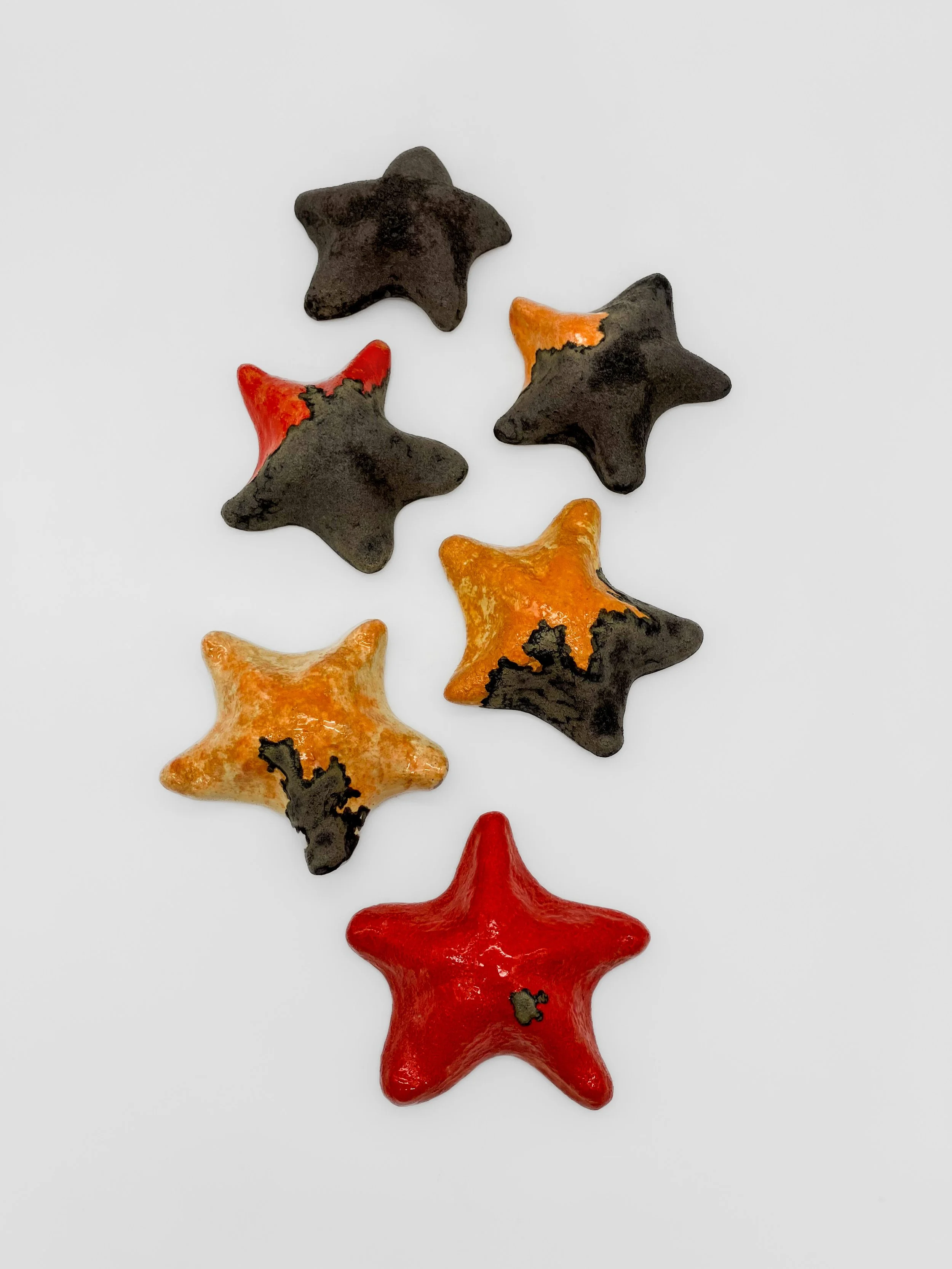
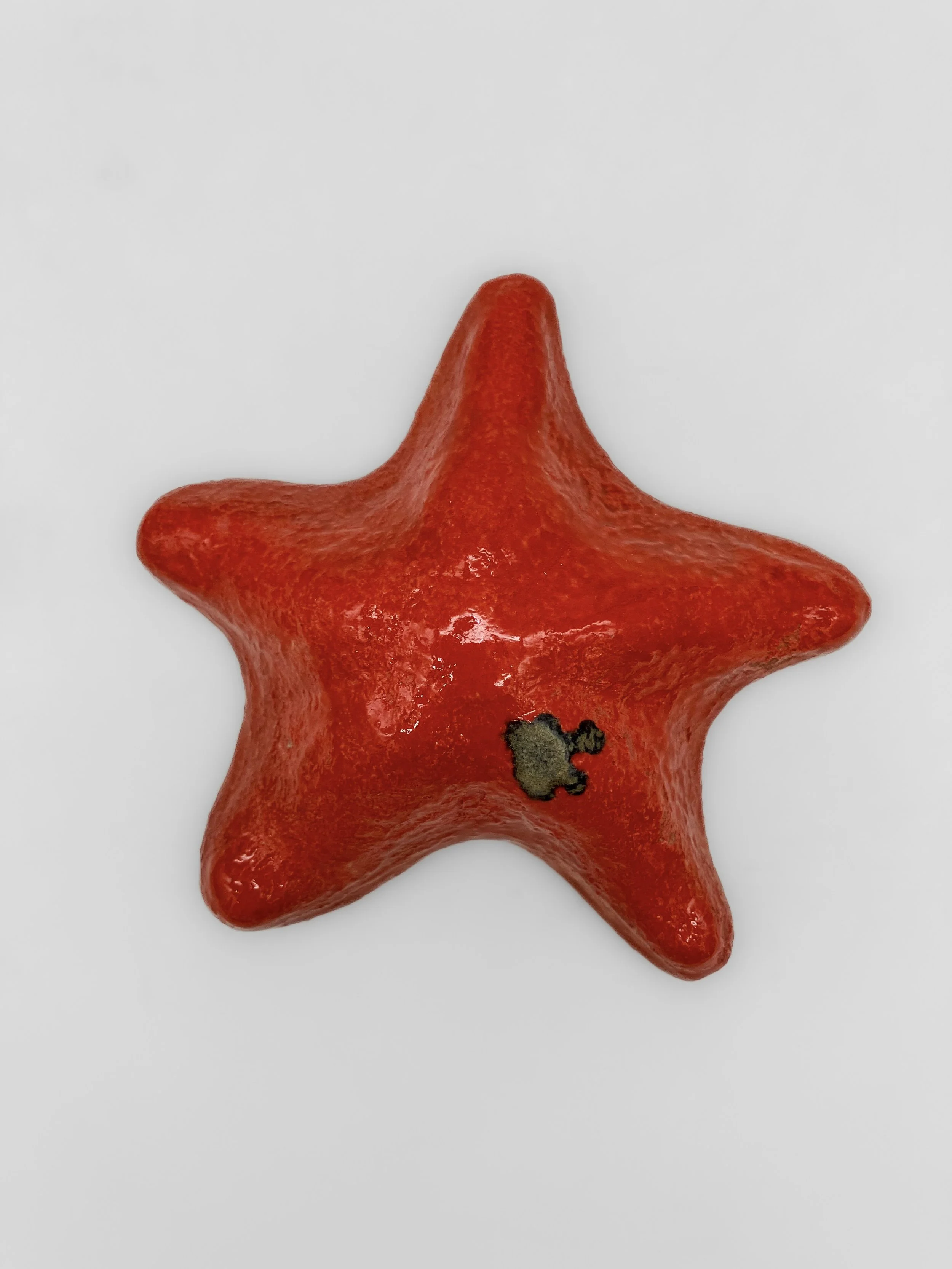
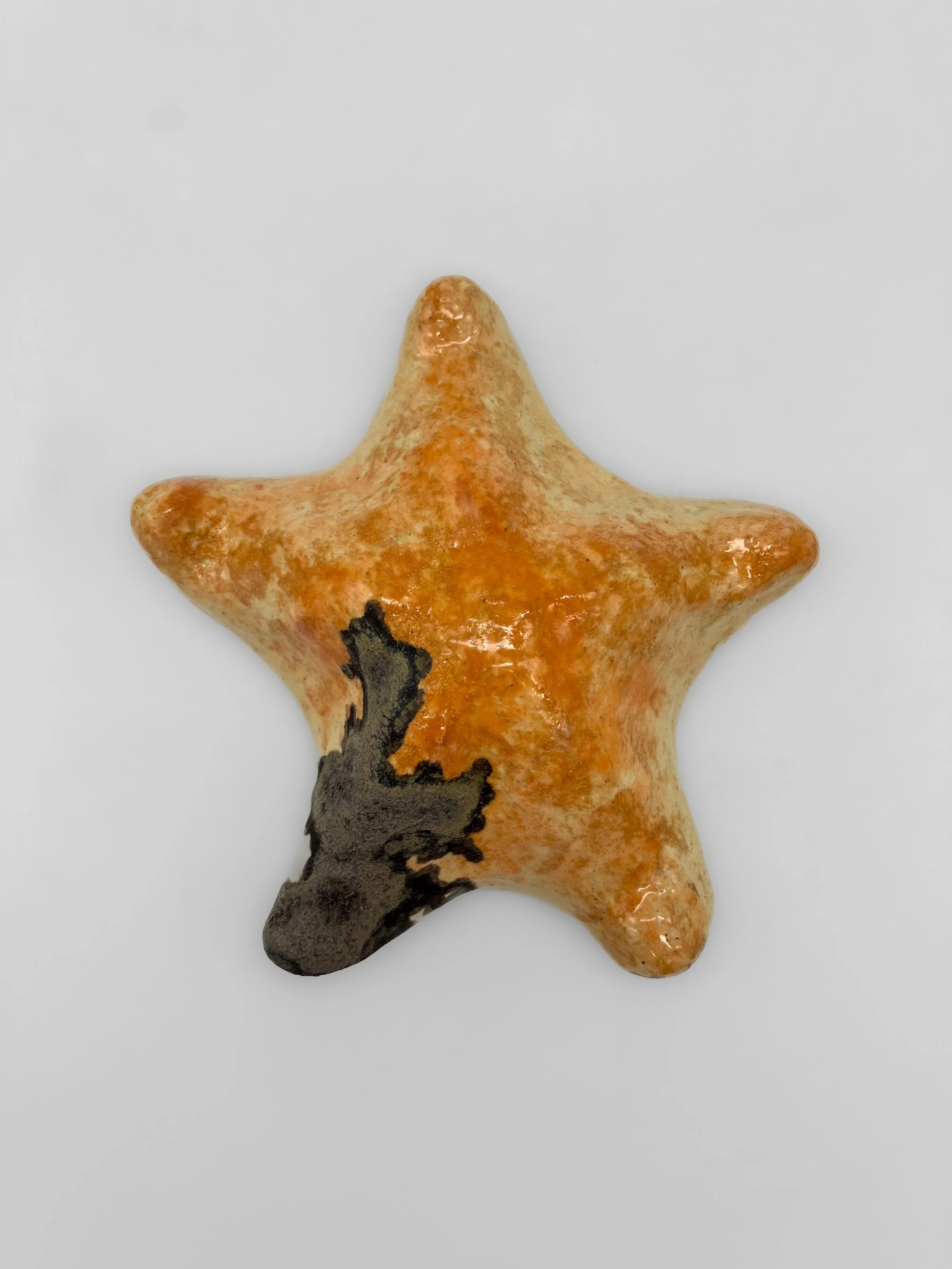
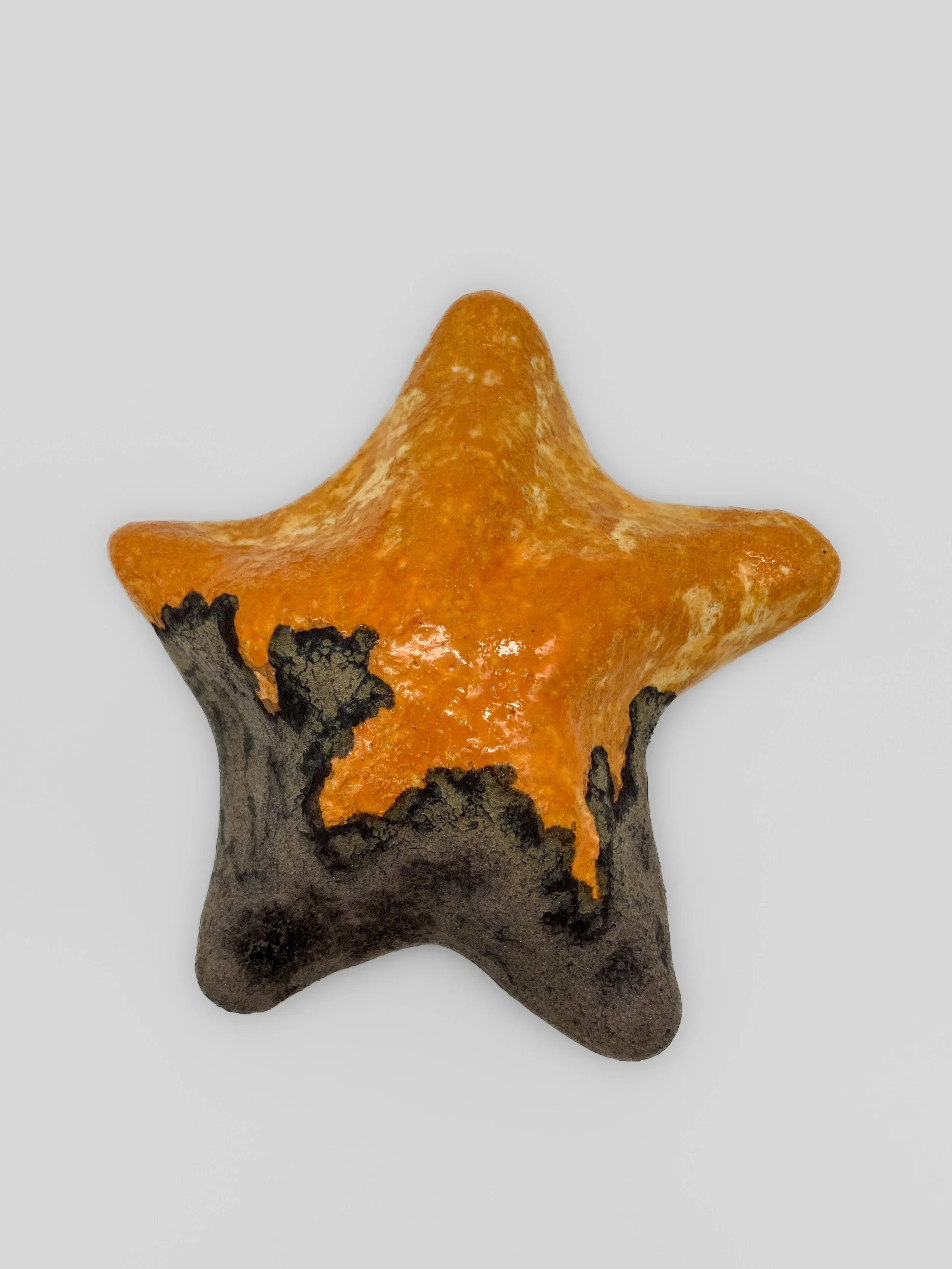
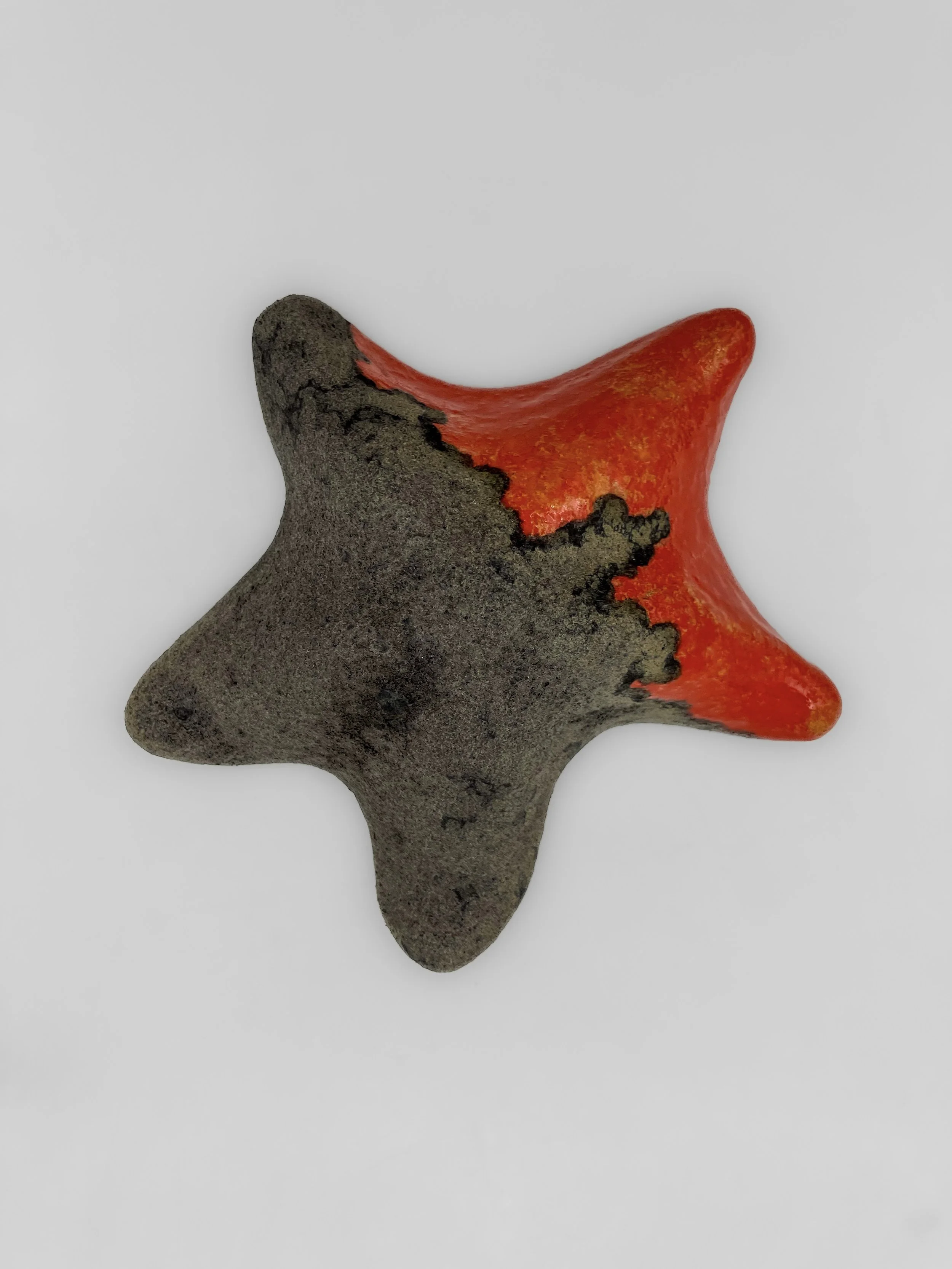
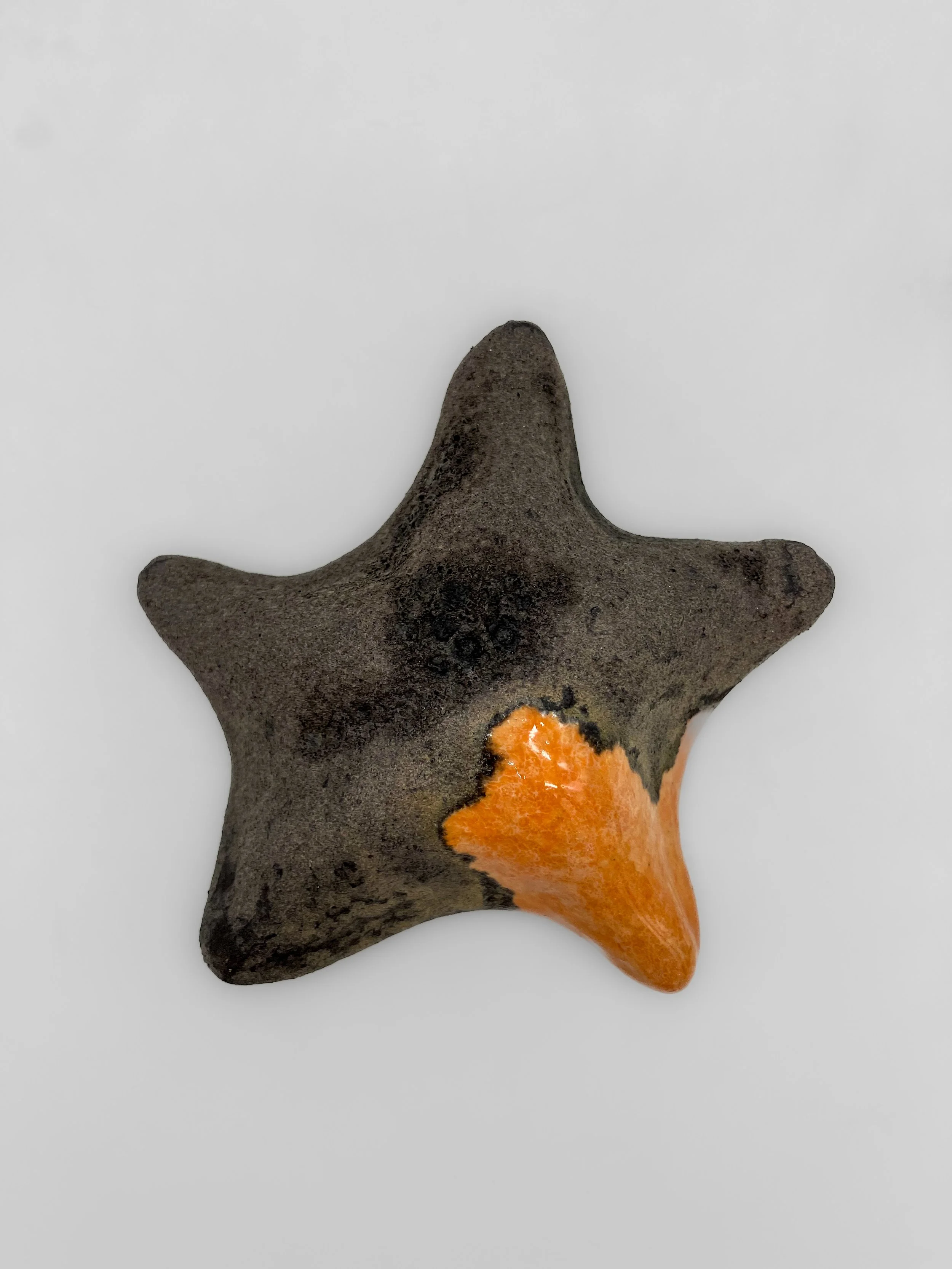
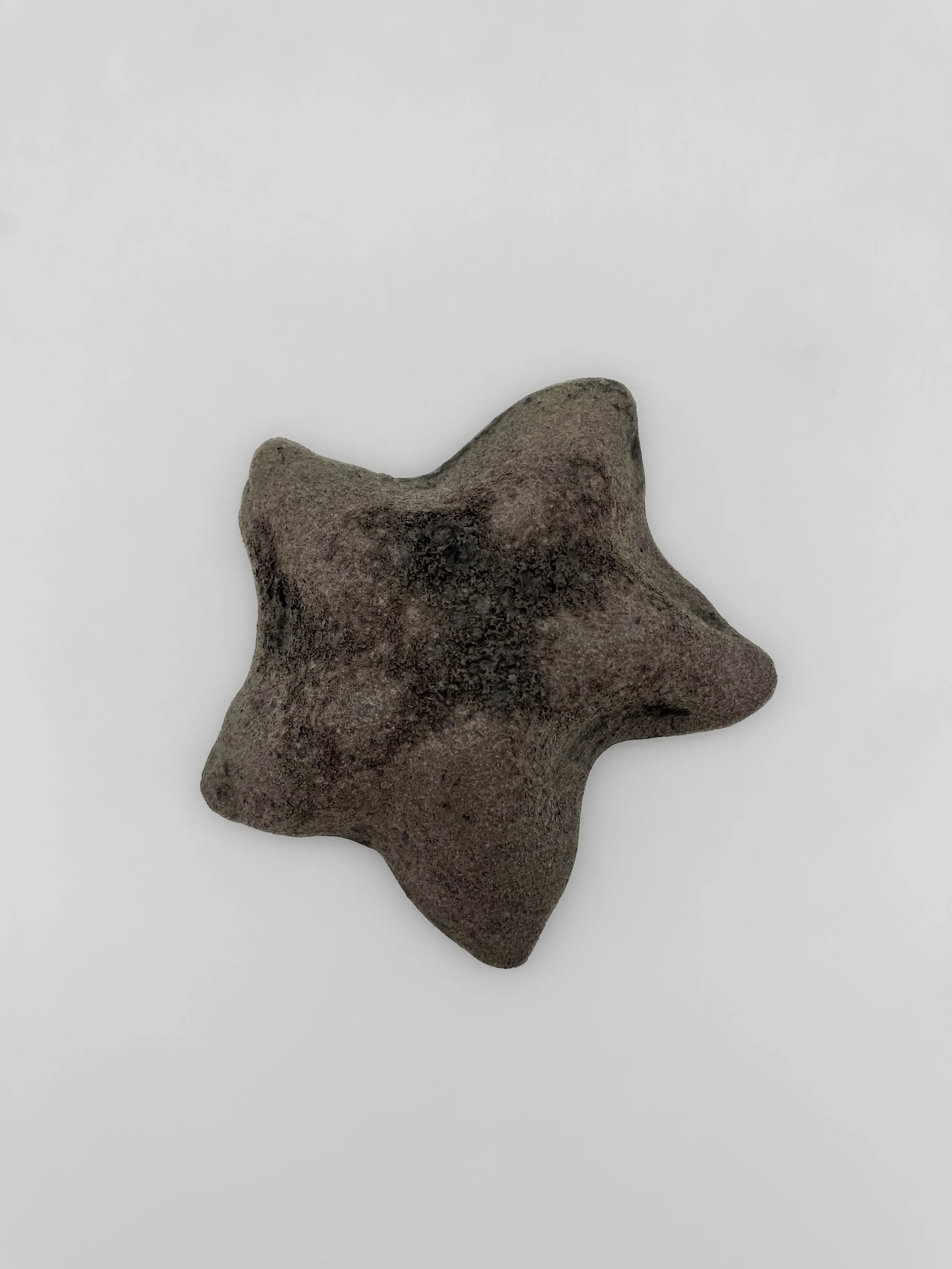
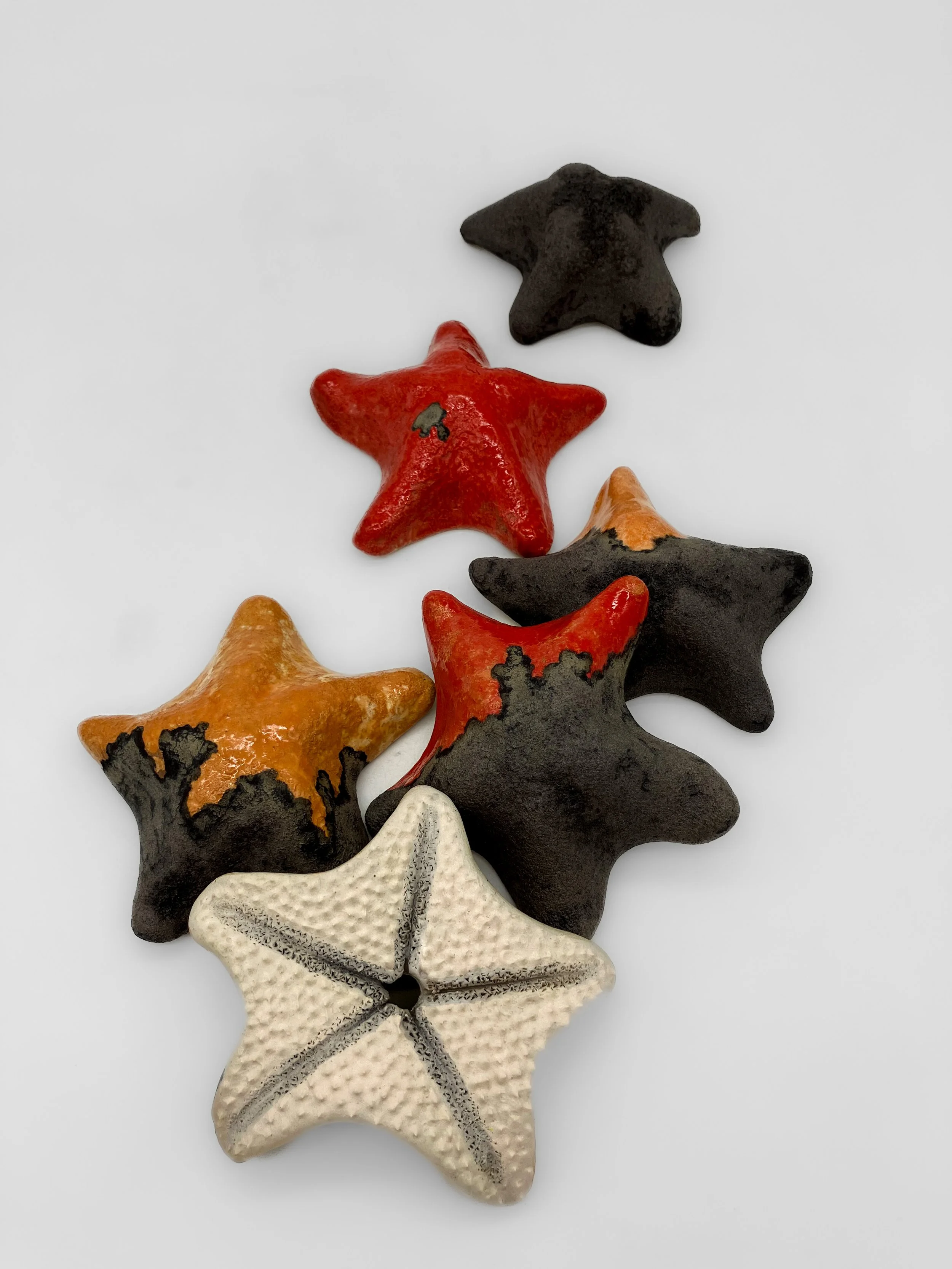
Sea star vs Vibrio pectenicida (sea star wasting disease)
Glazed ceramic
4x4x1.5 inches each (installation size varies)
2026
Our oceans are getting warmer. Over 90% of excess heat energy from greenhouse gasses trapped in Earth’s climate system are absorbed by the ocean, and this raises its temperature. In a warmer sea the bacterium Vibrio pectenicida can thrive, killing billions of sea stars over the last decade by causing what is known as sea star wasting disease. An infected sea star becomes lethargic and begins to “melt” as the body disintegrates and dissolves. The loss of sea stars can massively disrupt the delicate ecosystems of marine habitats and has led to the loss of major kelp forests worldwide.