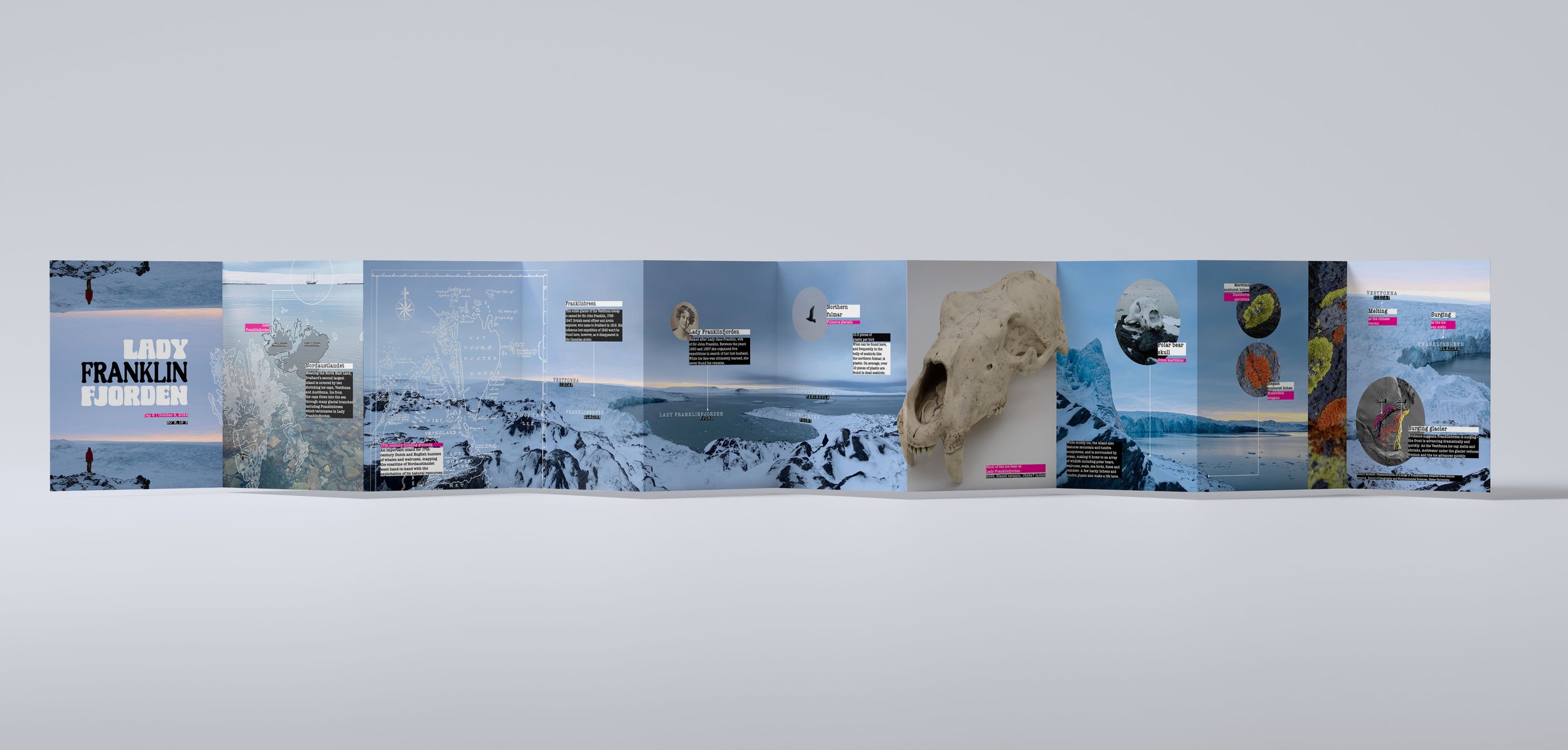
Lady Franklinfjorden
(80˚ N, 19˚E)
2025, Digital collage; Inkjet printed artist’s book in a handmade paper case and a social media carousel post
Book: 50x6 inches (open)
Social media post: 10 images, 1080x1350px each
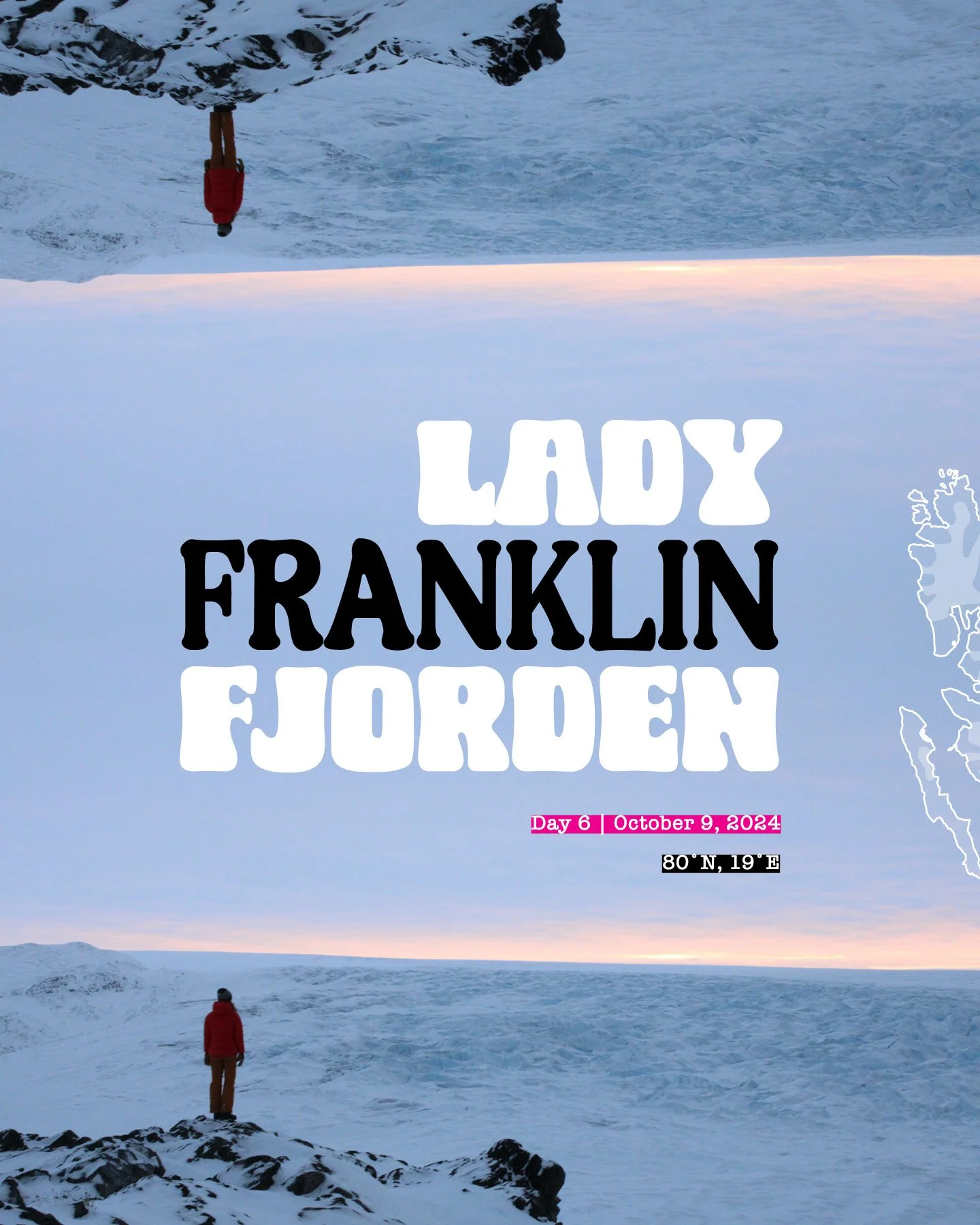
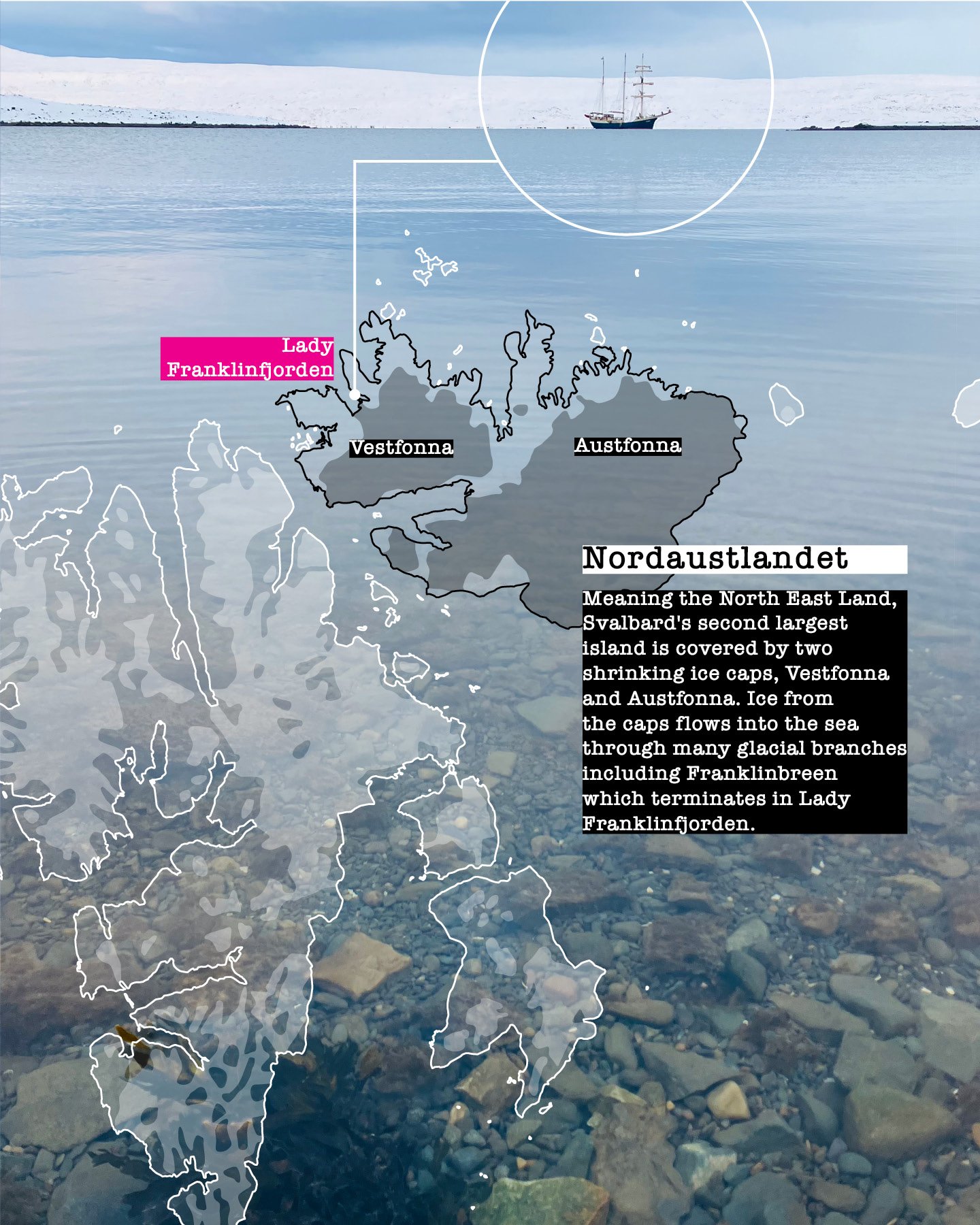
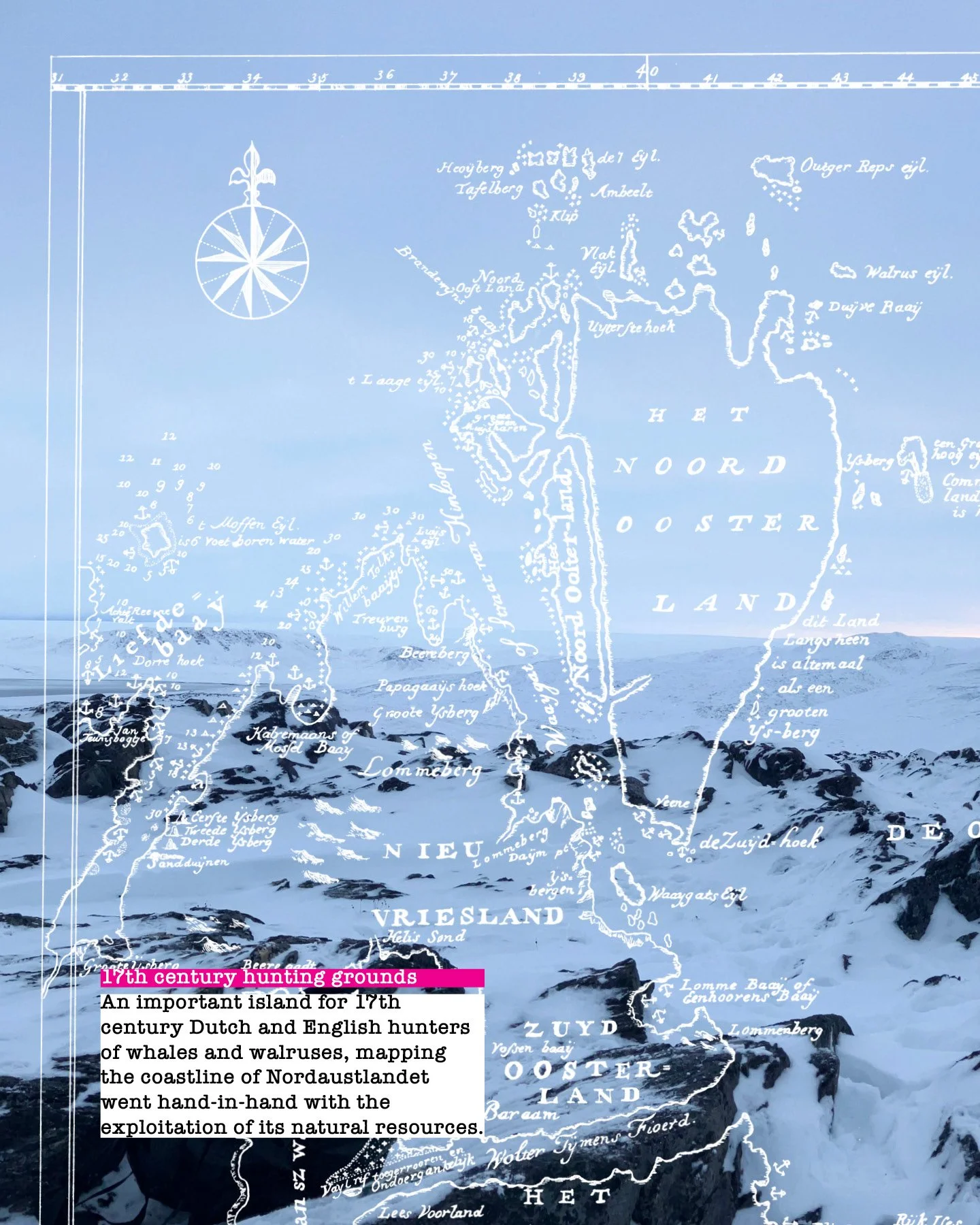
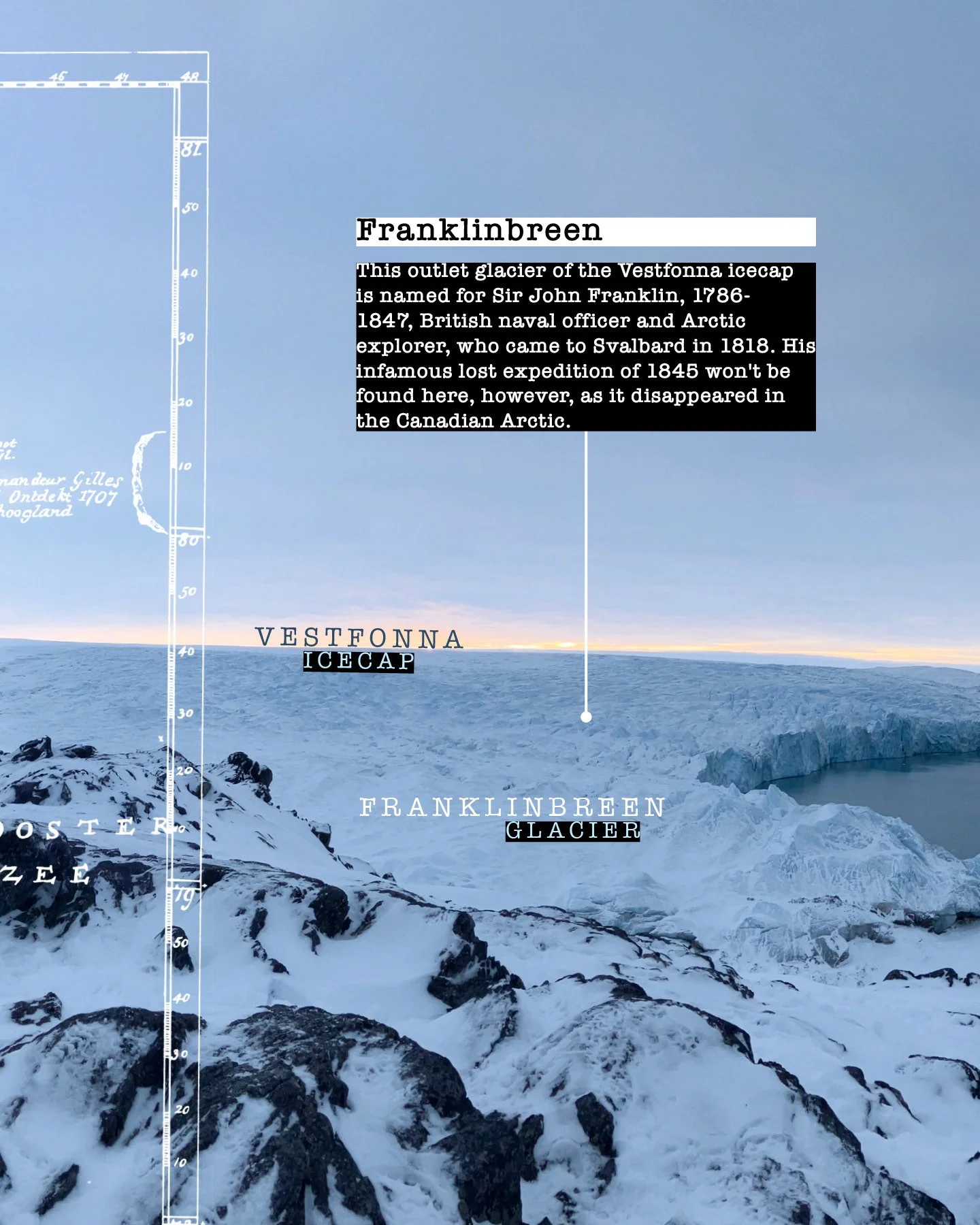
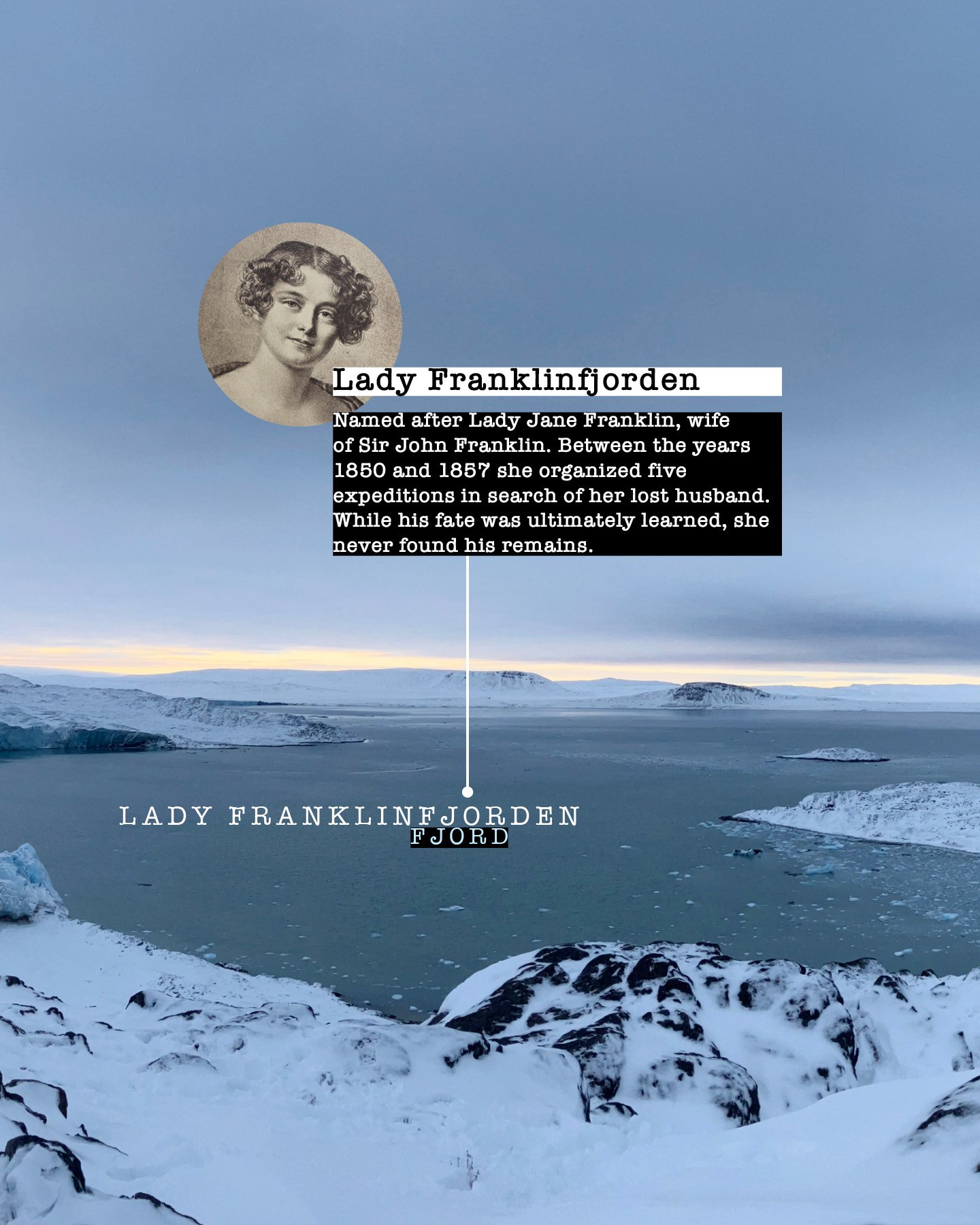
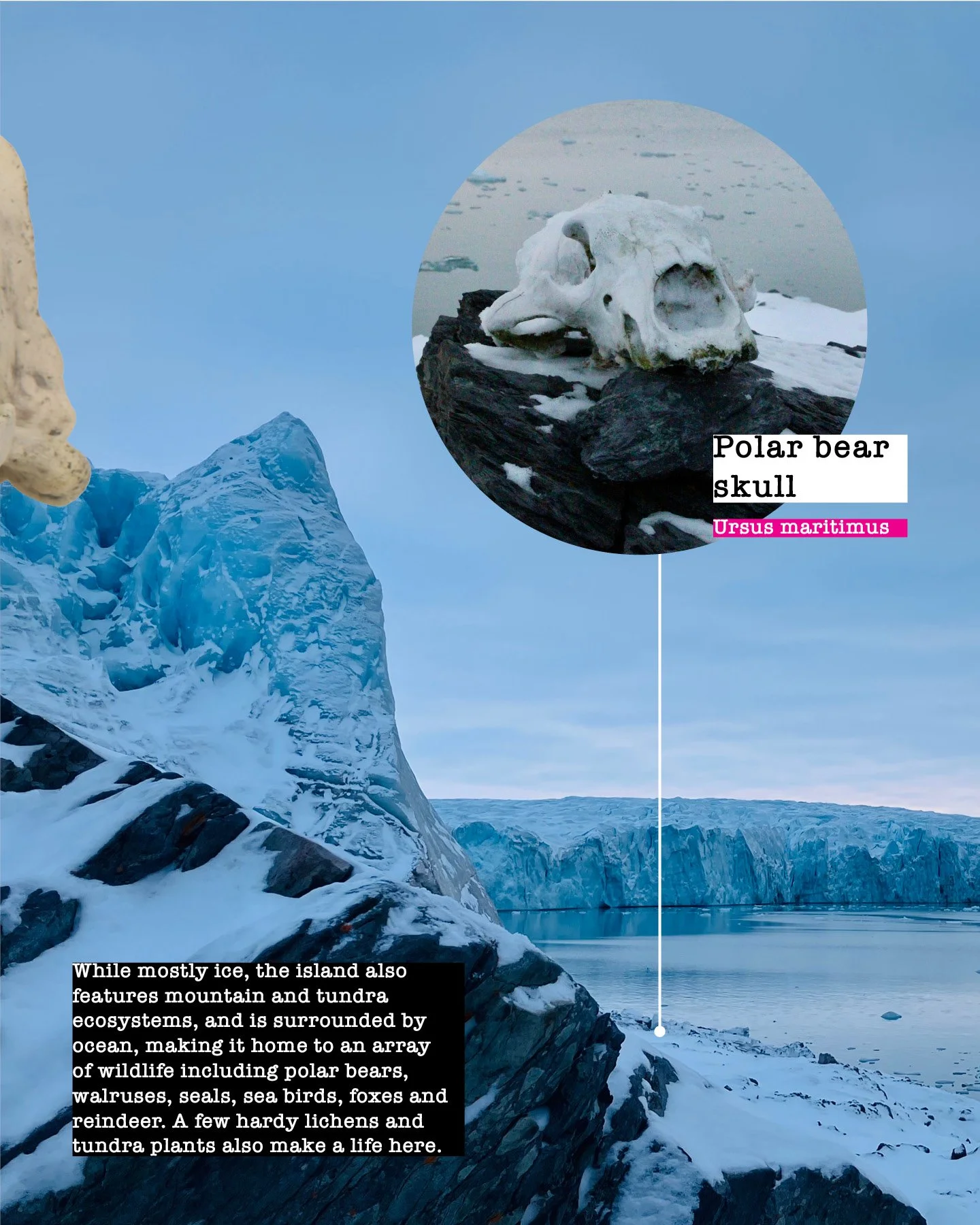
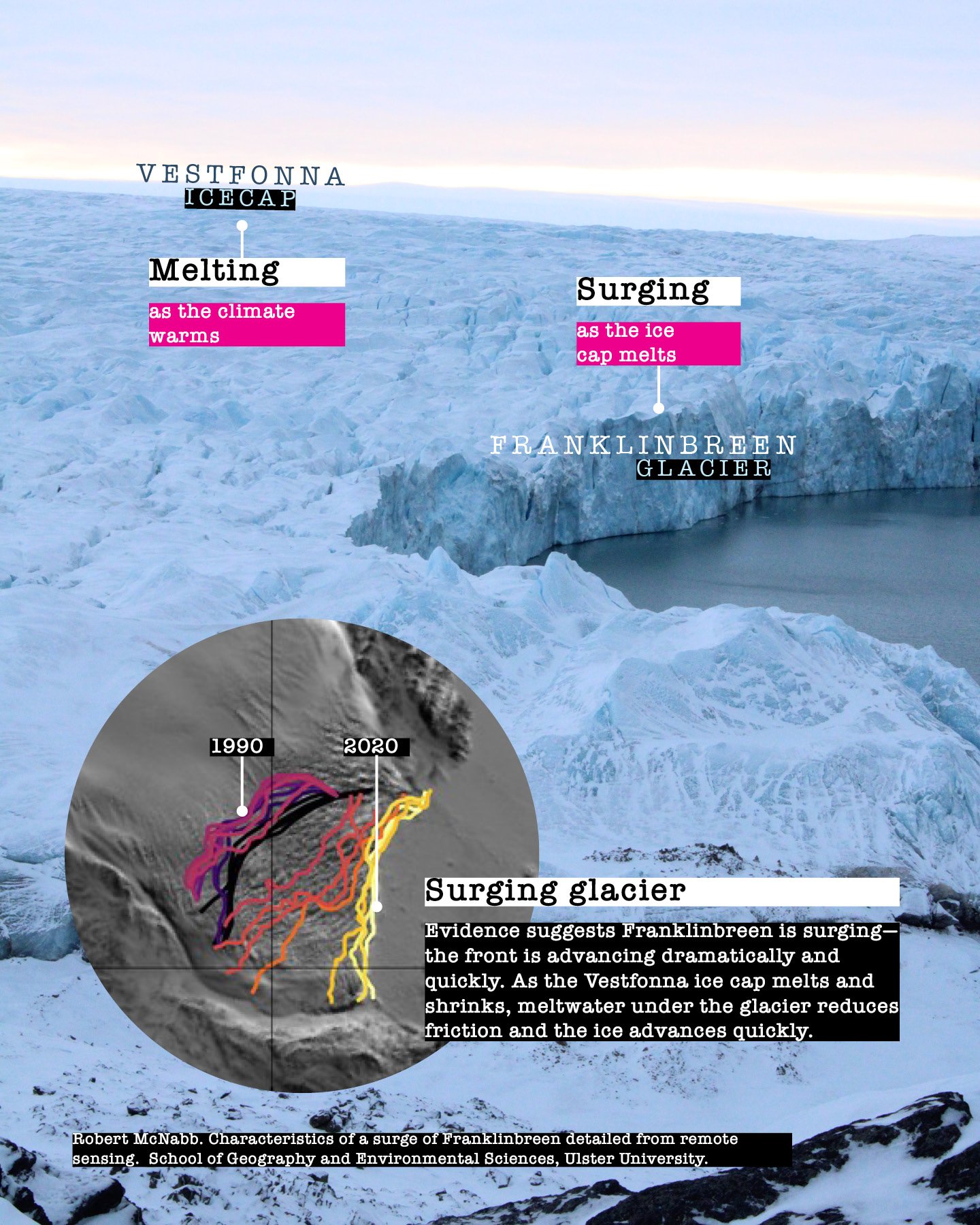
On day six of the Arctic Circle 2024 autumn residency, we found ourselves as far north and east as this expedition would venture. Farther than I expected as I didn’t even have the map for the second largest island in Svalbard, Nordaustlandet. But no bother, it intensified the sensation of being in the wilderness at the end of the world. Deep in the fjord named after Lady Franklin the weather was calm and the water still. We took the zodiacs to shore for a landing—a pebbly, snow covered beach with balls of seaweed gently rolling under the tide. We hiked to the top of a rocky ridge revealing the massive ice cap Vestfonna stretching as far southeast as I could see, merging with the sky and the low, slowly disappearing sun. Vestfonna, and her bigger sister Austfonna, are some of the largest ice caps in Europe, but they are shrinking at an alarming rate. Their rivers of ice branch out to the sea through tidewater glaciers like Franklinbreen, which, because of the warming climate is surging forward between bouts of retreat, revealing the unstable ice upstream. All glaciers move and change but in a warmer world they can’t replenish the seasonal loss, and in their fits of unrest can shift the outlet glacier’s terminus dramatically. But in that moment the ice felt still and calm and majestic, and we stood in absolute awe of her massive beauty.
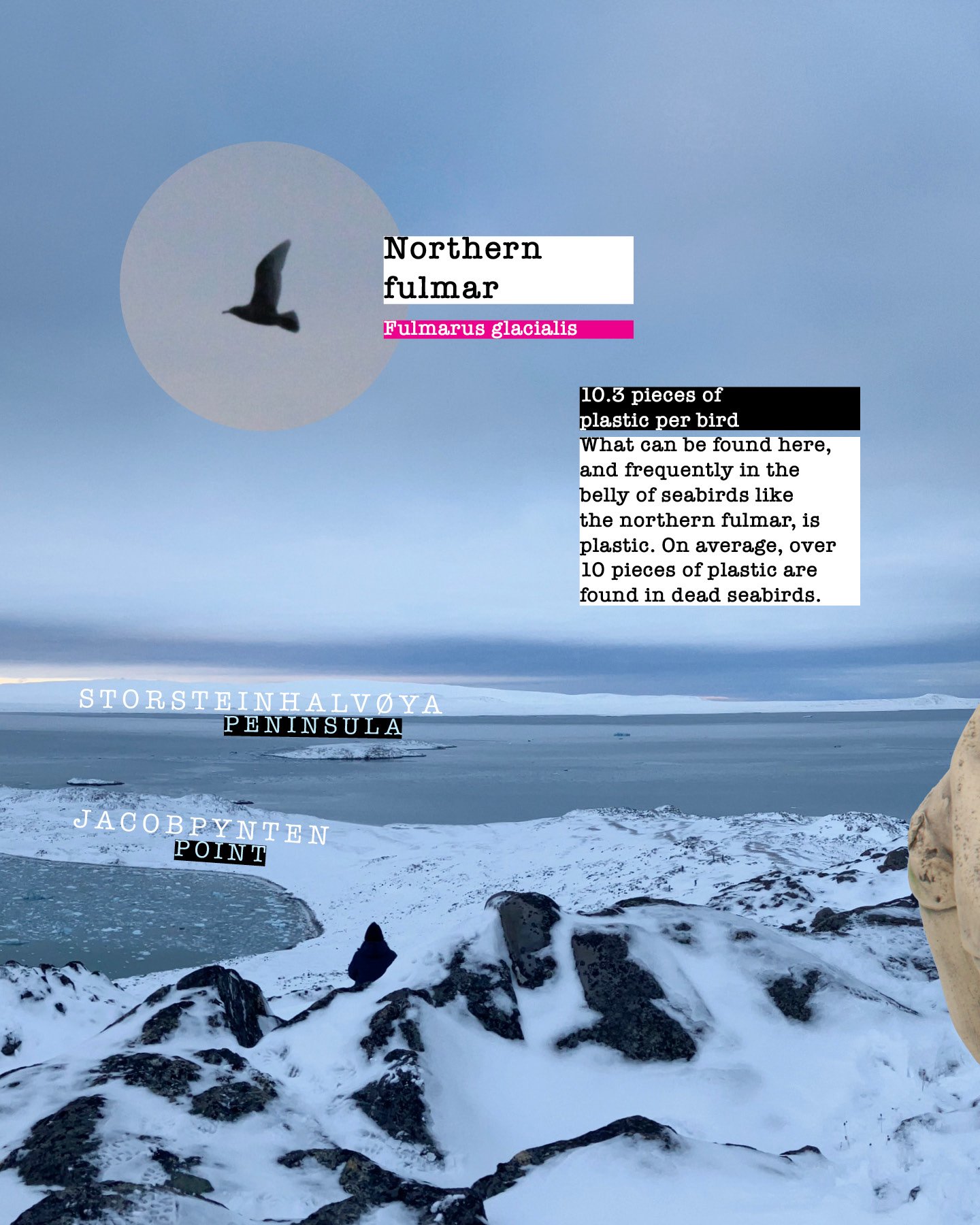
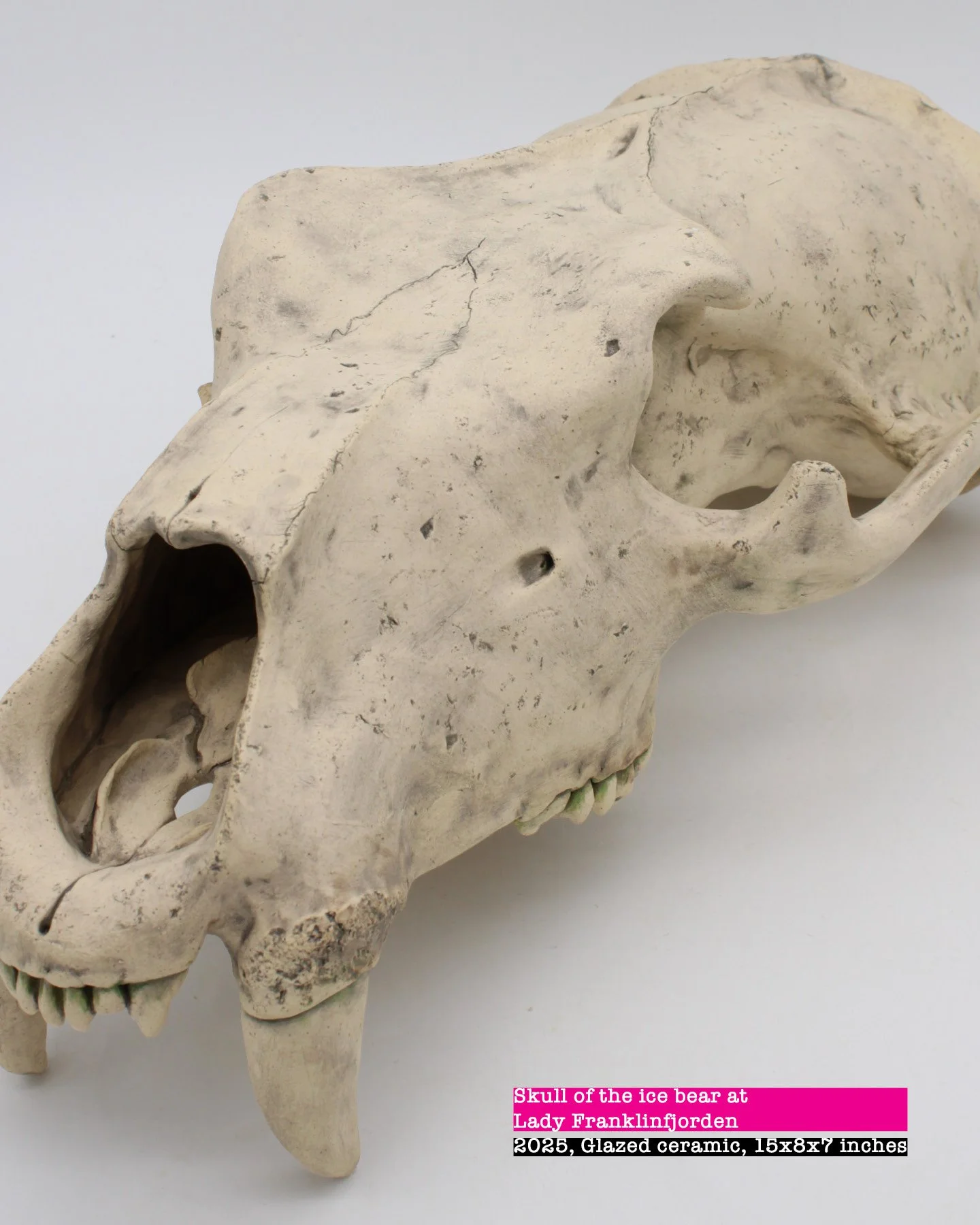
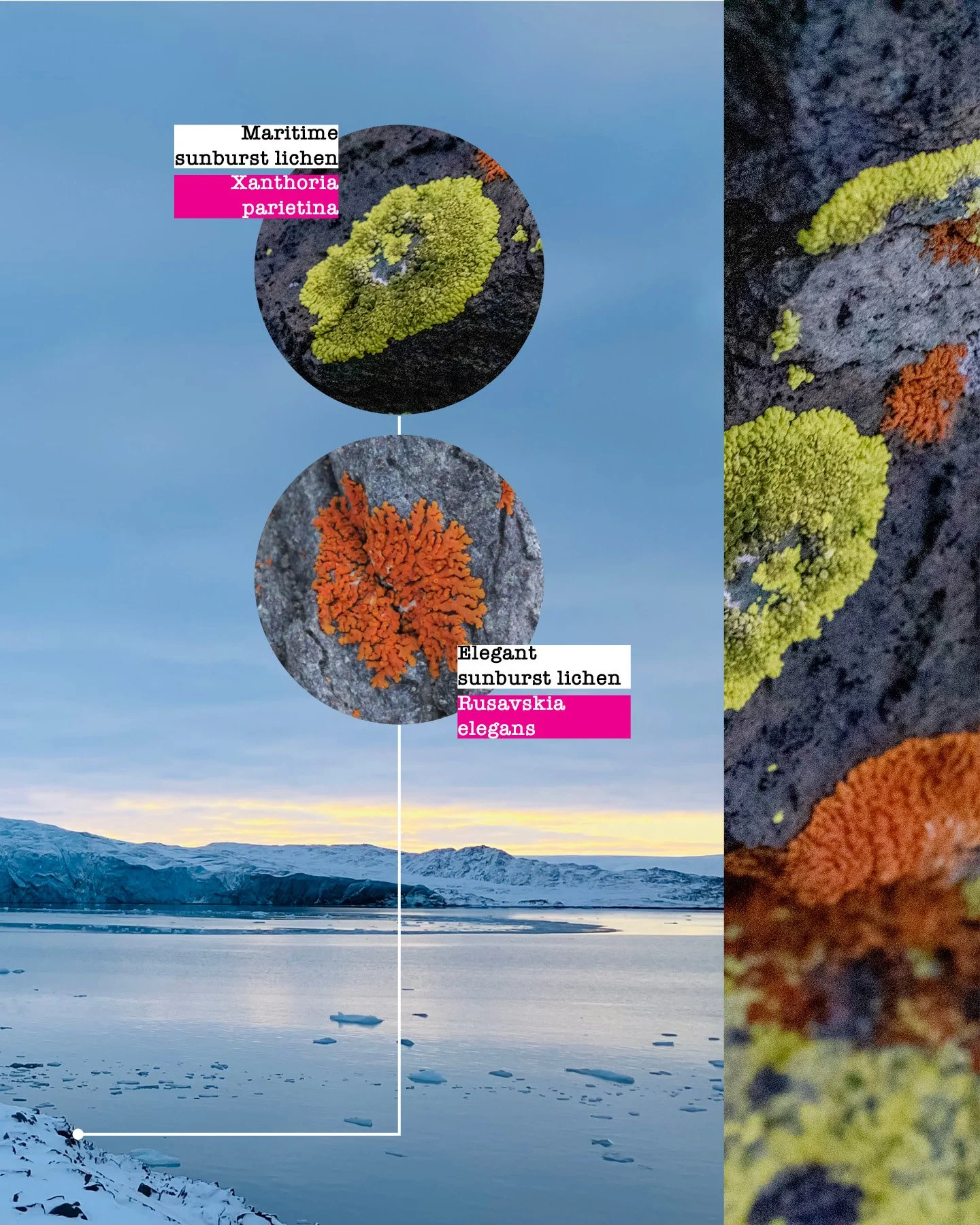
Reluctantly we descended from this view, but to walk alongside the edges of a glacier is no tragedy either. Her deep blue walls of trundling ice formed strangely shaped boulders and spires full of striations and fissures, revealing her restlessness over the last few decades. A trail of arctic fox prints meandered along the path, a reminder that this island provides life to many wild animals, none more desired and feared as the polar bear, which could be behind any of the many snow covered ridges around us. Would our scent wake one from slumber? Or would we turn a corner and interrupt their hunt or feast? This is their land, and one must visit with alert caution and reverence for their place in the cryospheric ecosystem.