Fuglehuken, Svalbard
(78˚ N, 10˚E)
2026, Digital collage; Inkjet printed artist’s book in a handmade paper case and a social media carousel post
Book: 50x6 inches (open)
Social media post: 10 images, 1080x1350px each
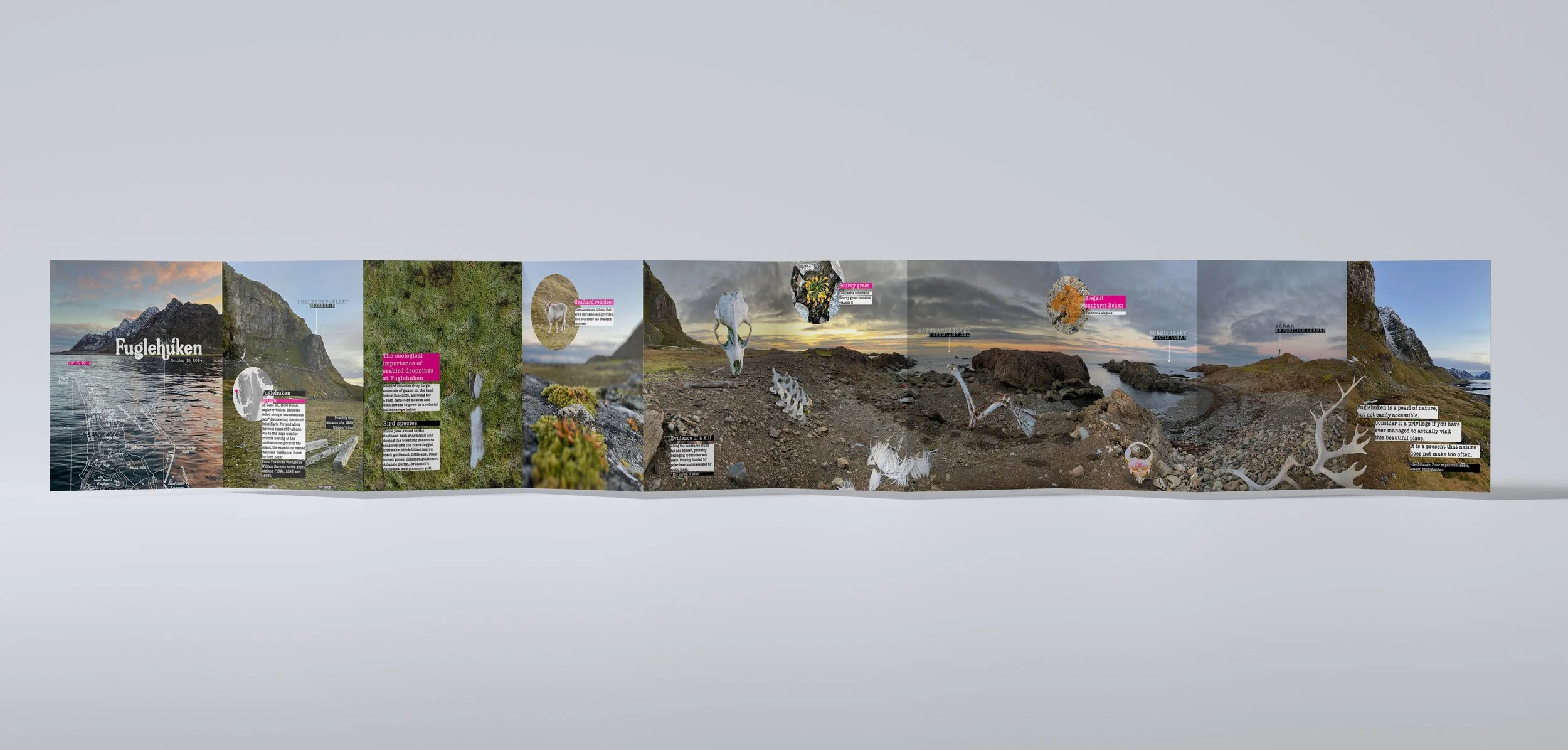
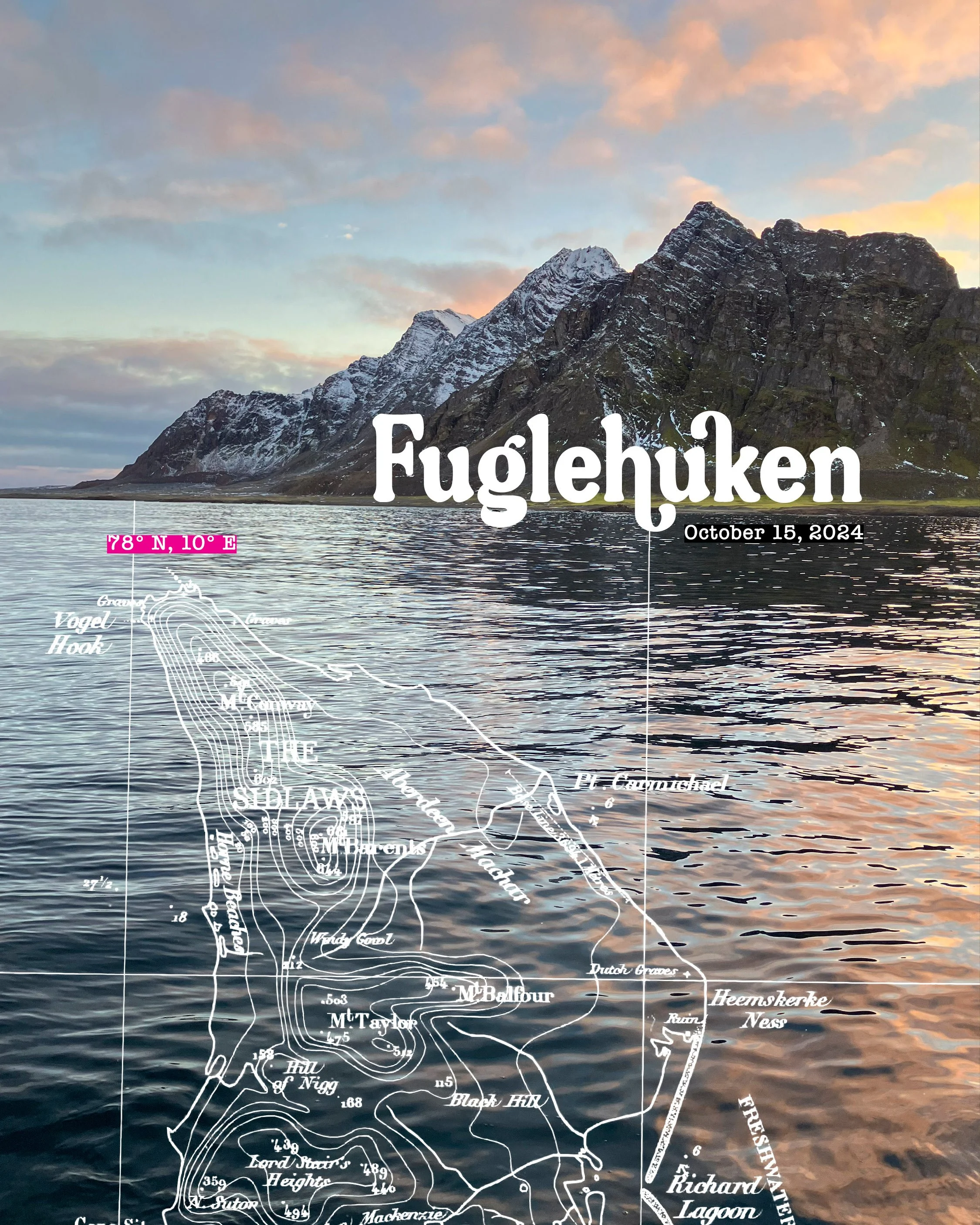
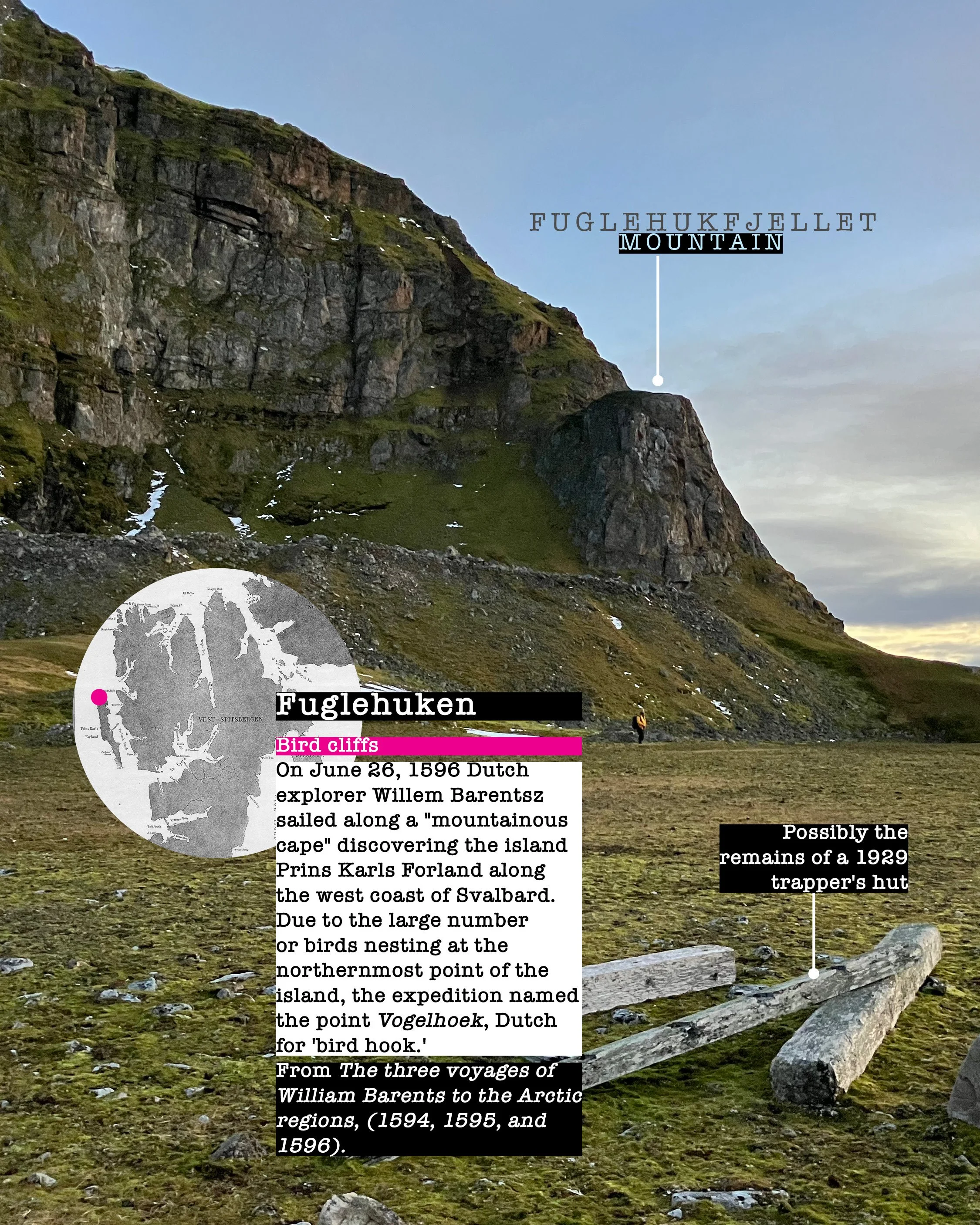
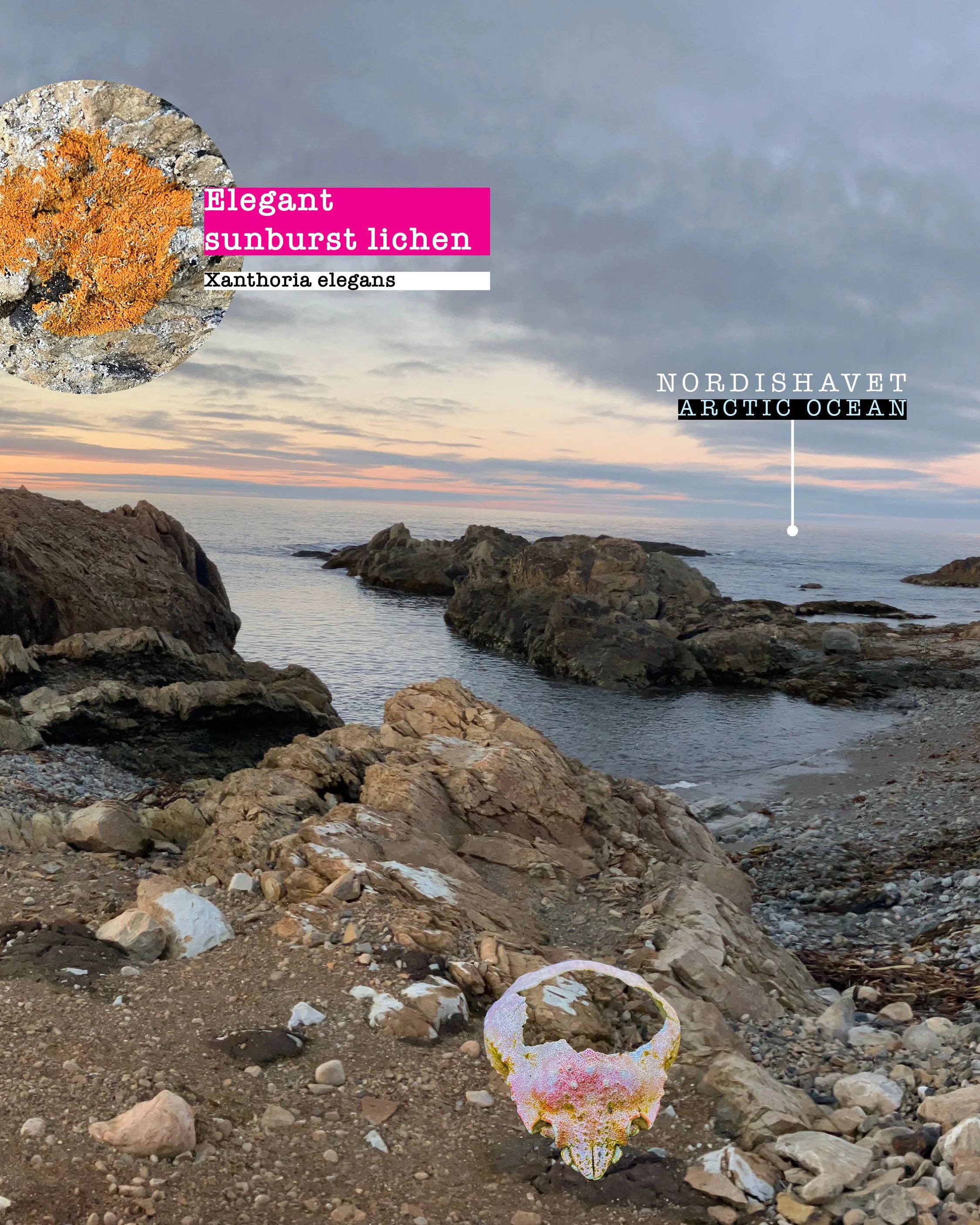
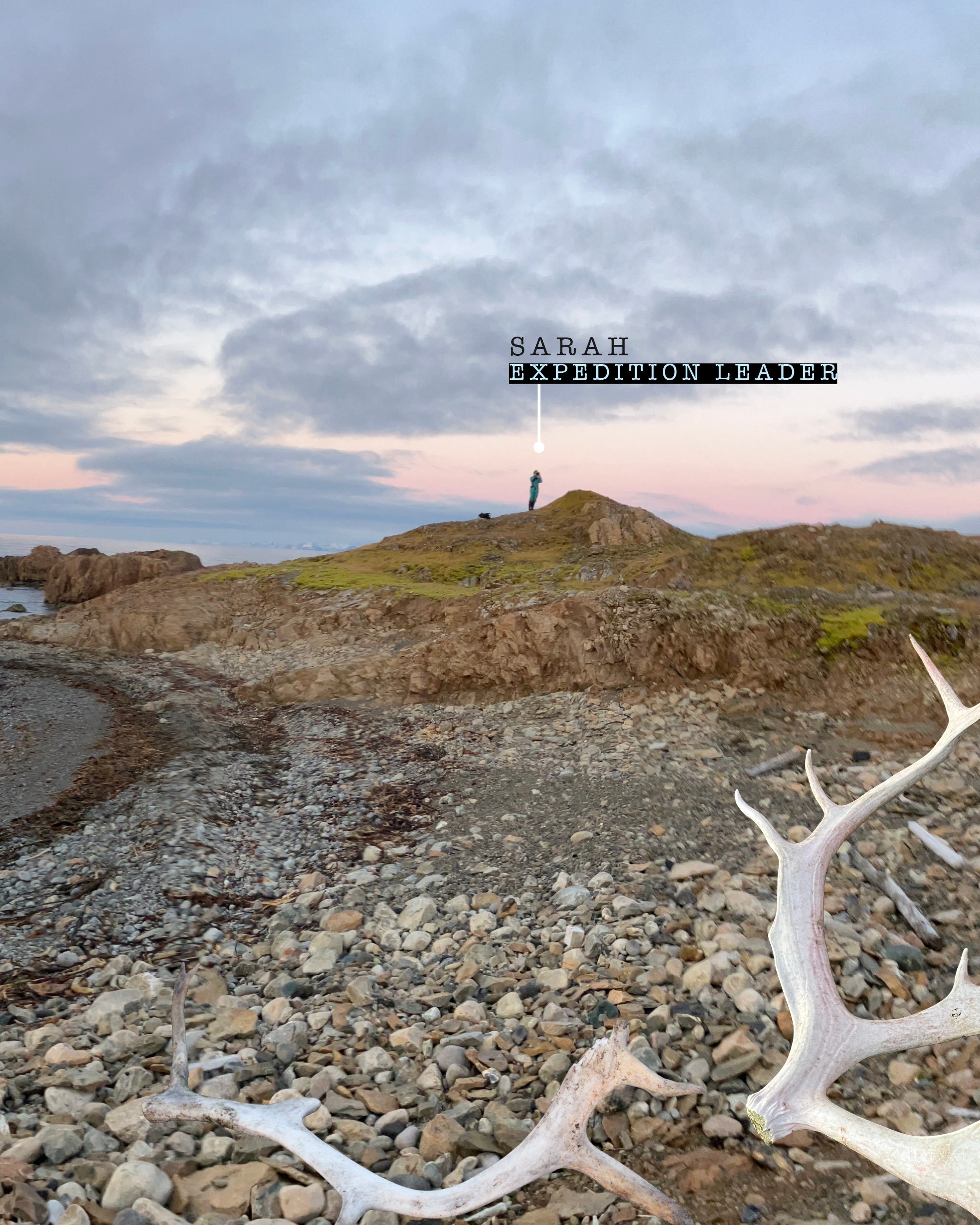
Chapter 10 of Spitsbergen Mania!: Fuglehuken, Svalbard (78° N, 10° E). The Arctic Circle Art & Science Residency Autumn Expedition. October 15, 2024. After departing from Ny-Alesund we sailed out of Kongsfjord and west to the northern tip of Prins Karls Forland, a long, slender island off the west coast of Spitsbergen. Here is Fuglehuken, which means “bird hook” or “bird point,” so named after the steep mountainous cliffs on which many sea birds nest over the summer months.
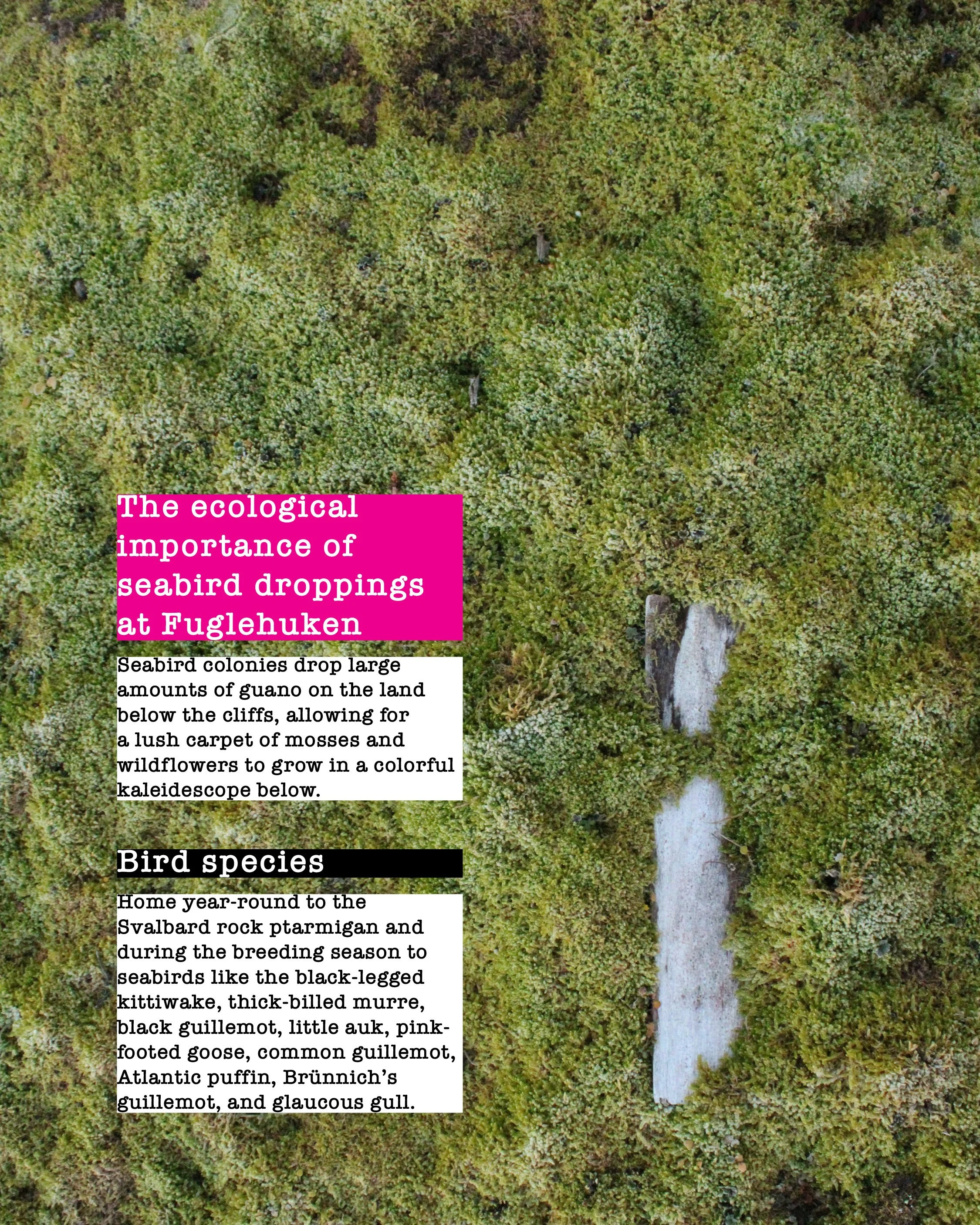
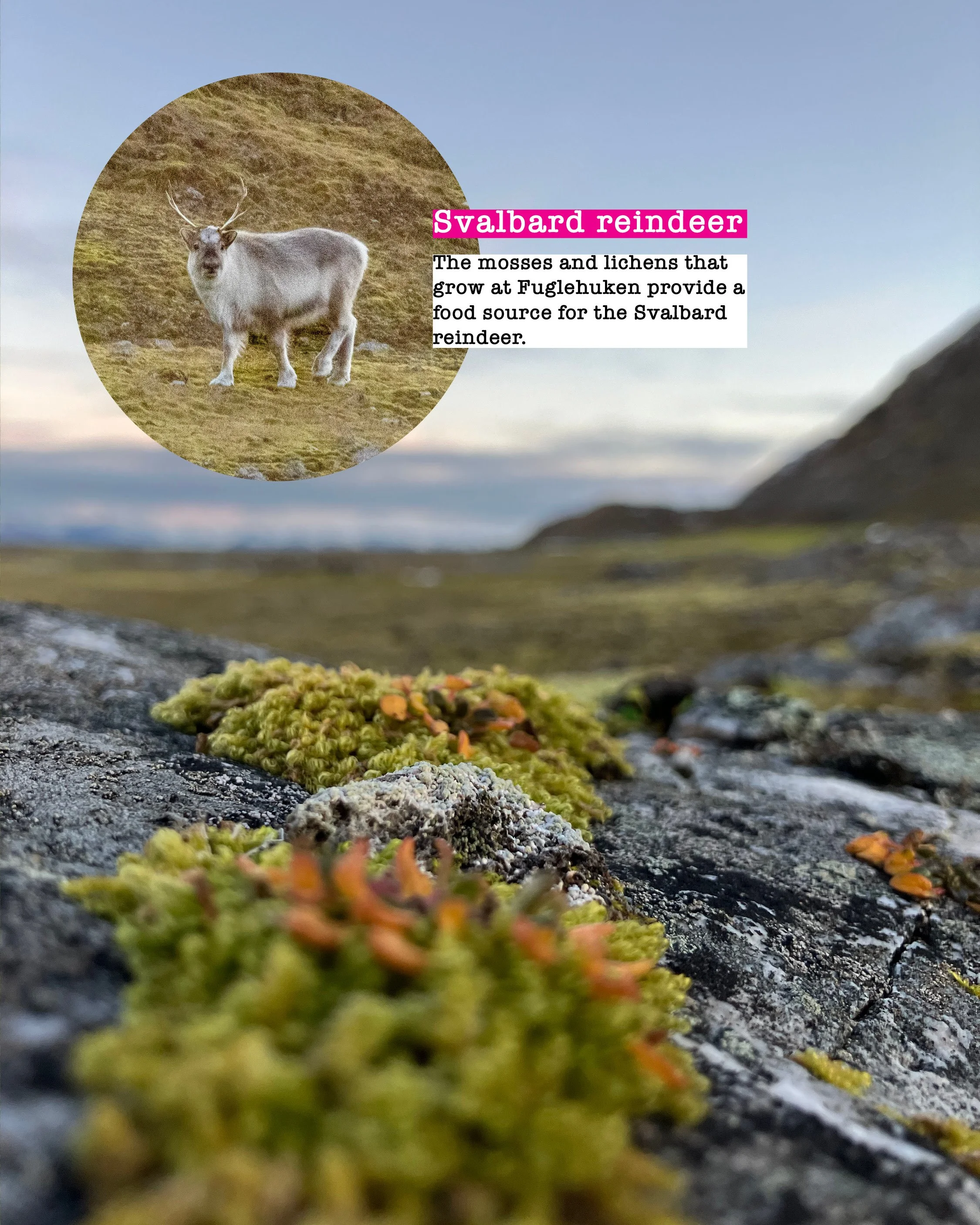
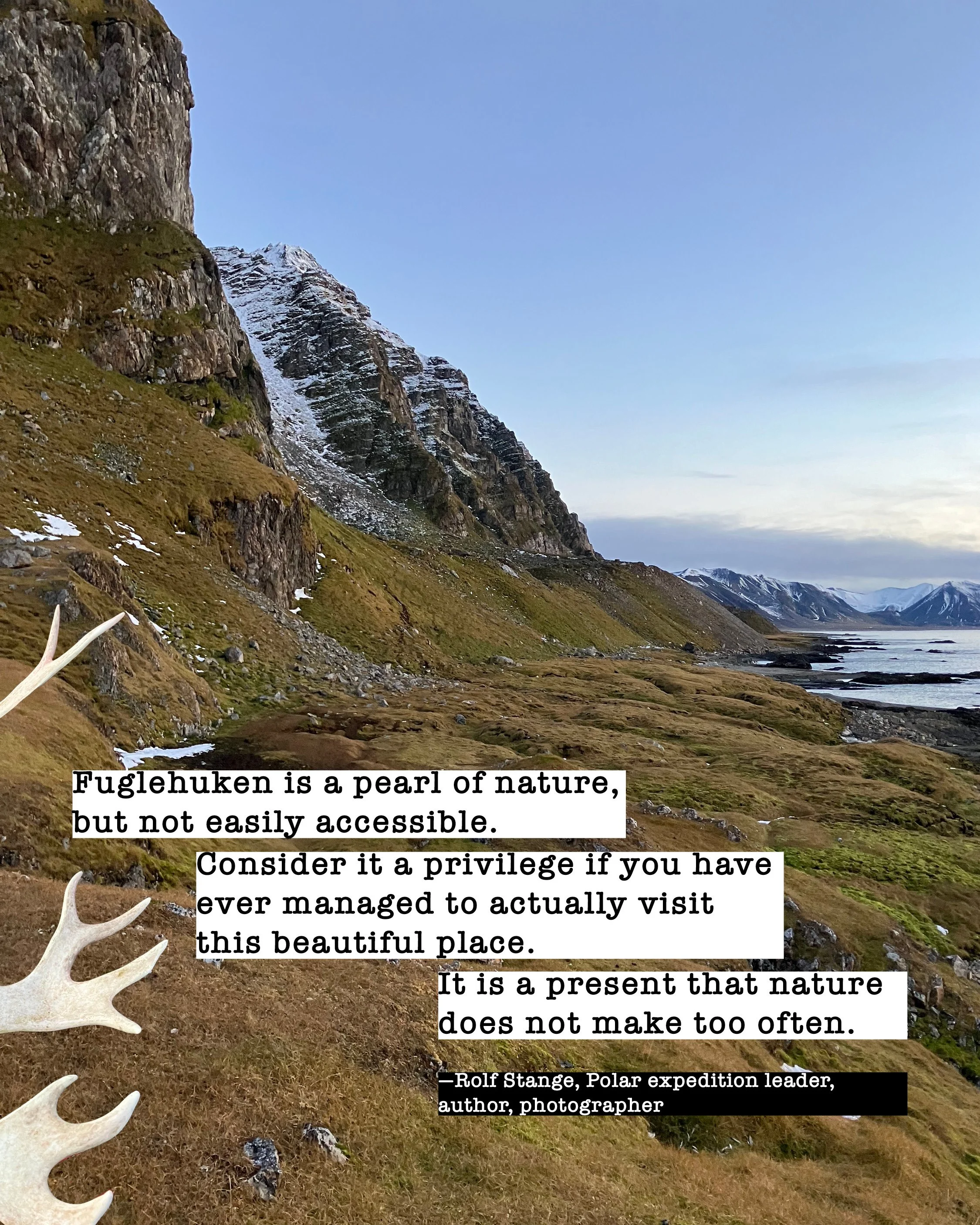
Over centuries the birds have dropped guano on the tundra below, allowing a rich tapestry of green and yellow mosses and lichens to thrive, which in turn provide vegetation for the Svalbard reindeer, who grazed peacefully in the distance as we arrived. The reindeer are sometimes the prey of polar bears, who prefer seals but due to the lack of sea ice the bears are finding new sources of prey.
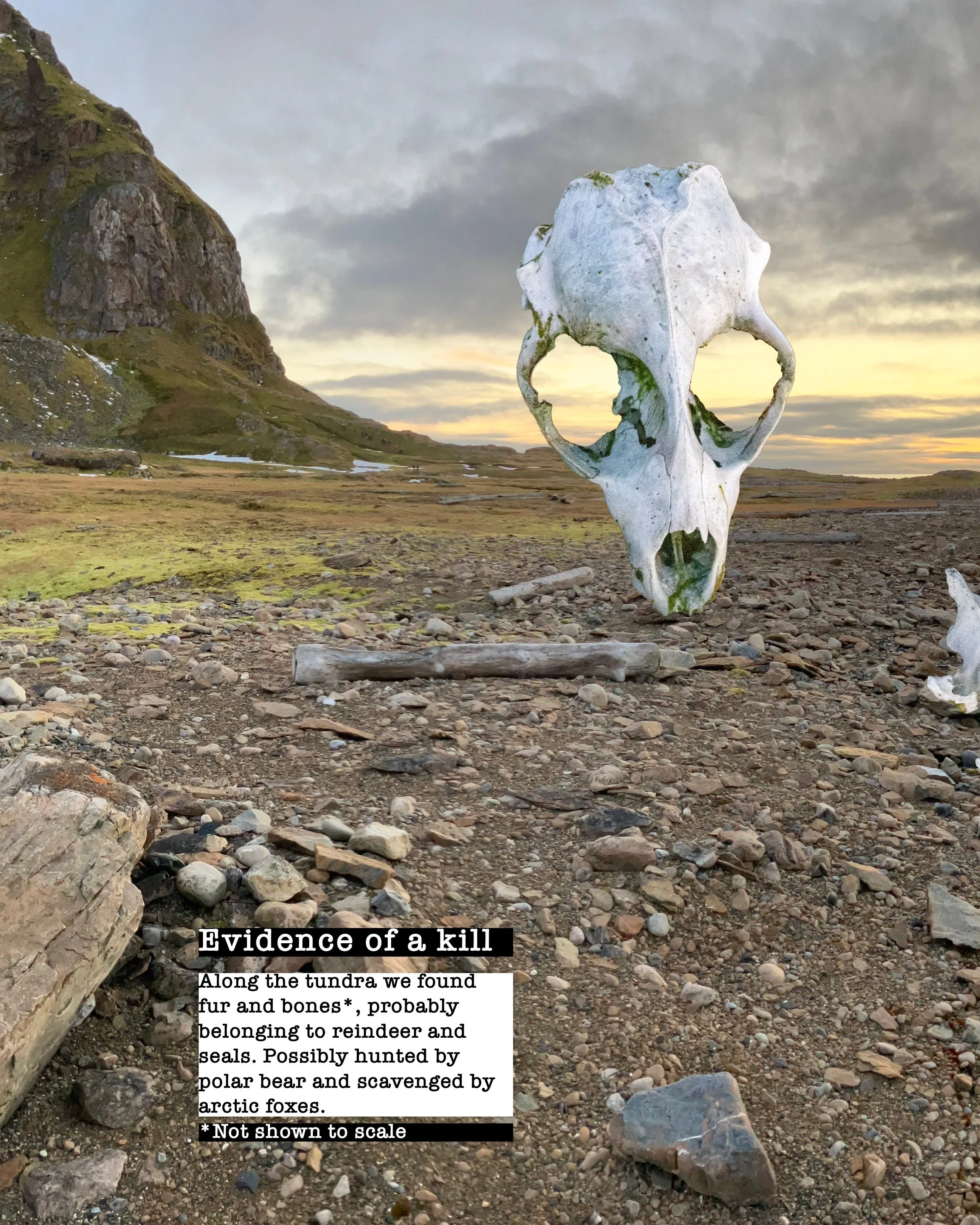
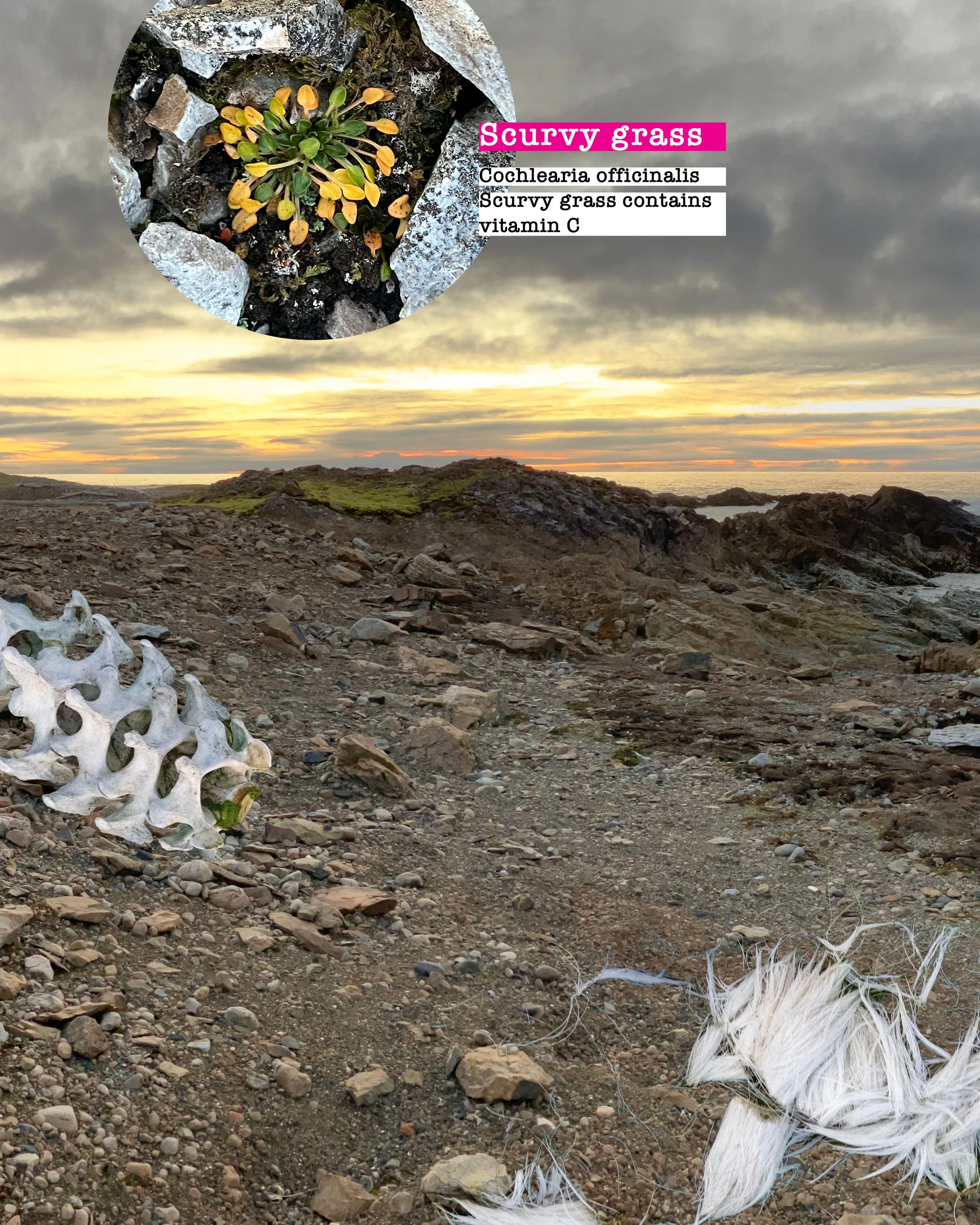
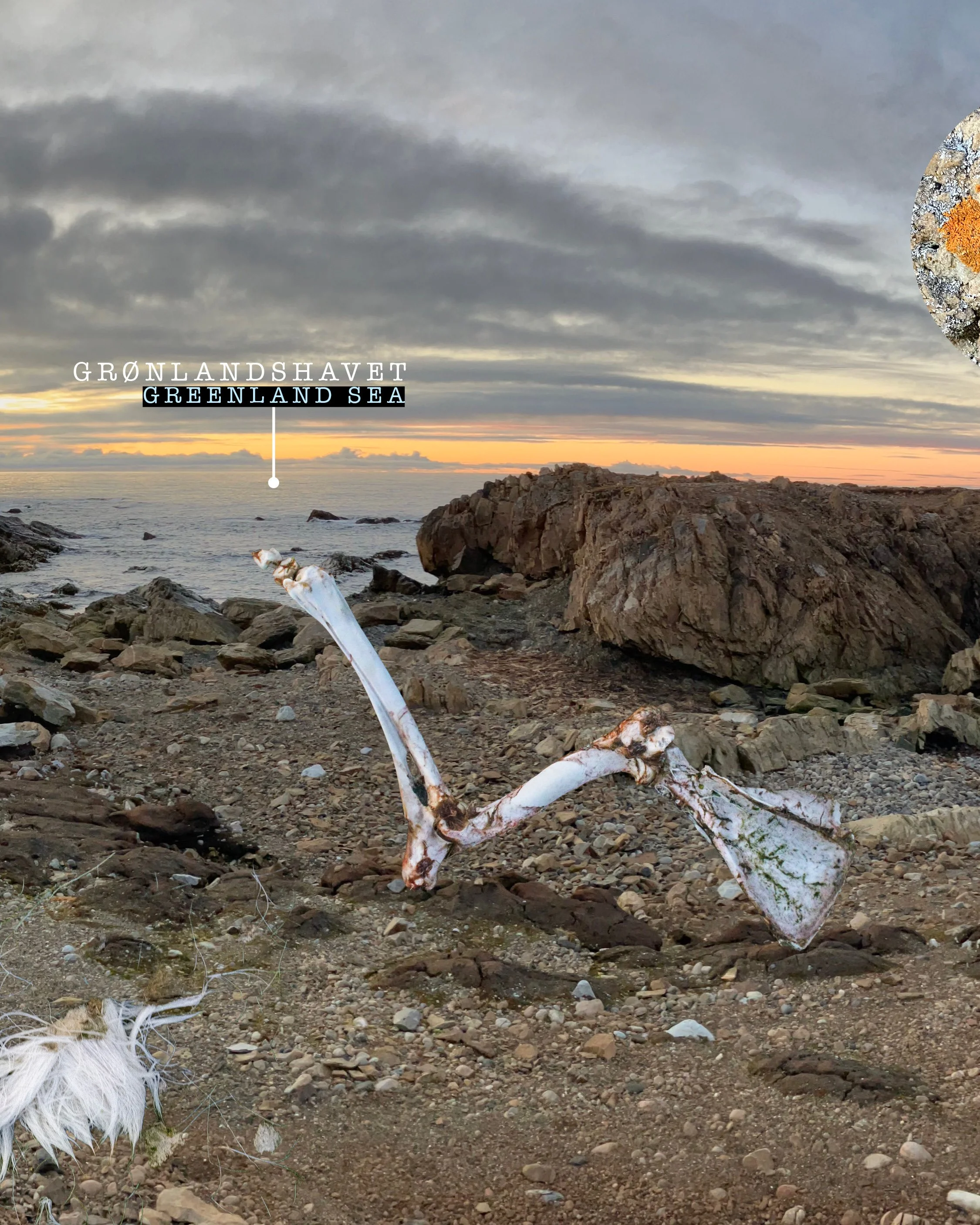
The sun slowly set on our walk along the unimaginably soft green tundra (nearly the only landing we had that wasn’t ice and rock and glacial moraine) where we discovered the remains of many animals including seals, reindeer, birds, and marine crustaceans. We walked to the western coast of the island to watch the colors of the October sky slowly shift over the Greenland Sea and the Arctic Ocean.
In the words of a polar expedition leader, author, and photographer, Rolf Stange, “Fuglehuken is a pearl of nature, but not easily accessible. Consider it a privilege if you have ever managed to actually visit this beautiful place. It is a present that nature does not make too often.” As one of these privileged visitors to the lush and vibrant island, I hold the experience very close to my heart and hope my images and words can share with you at least a small fraction of this pearl of nature.